

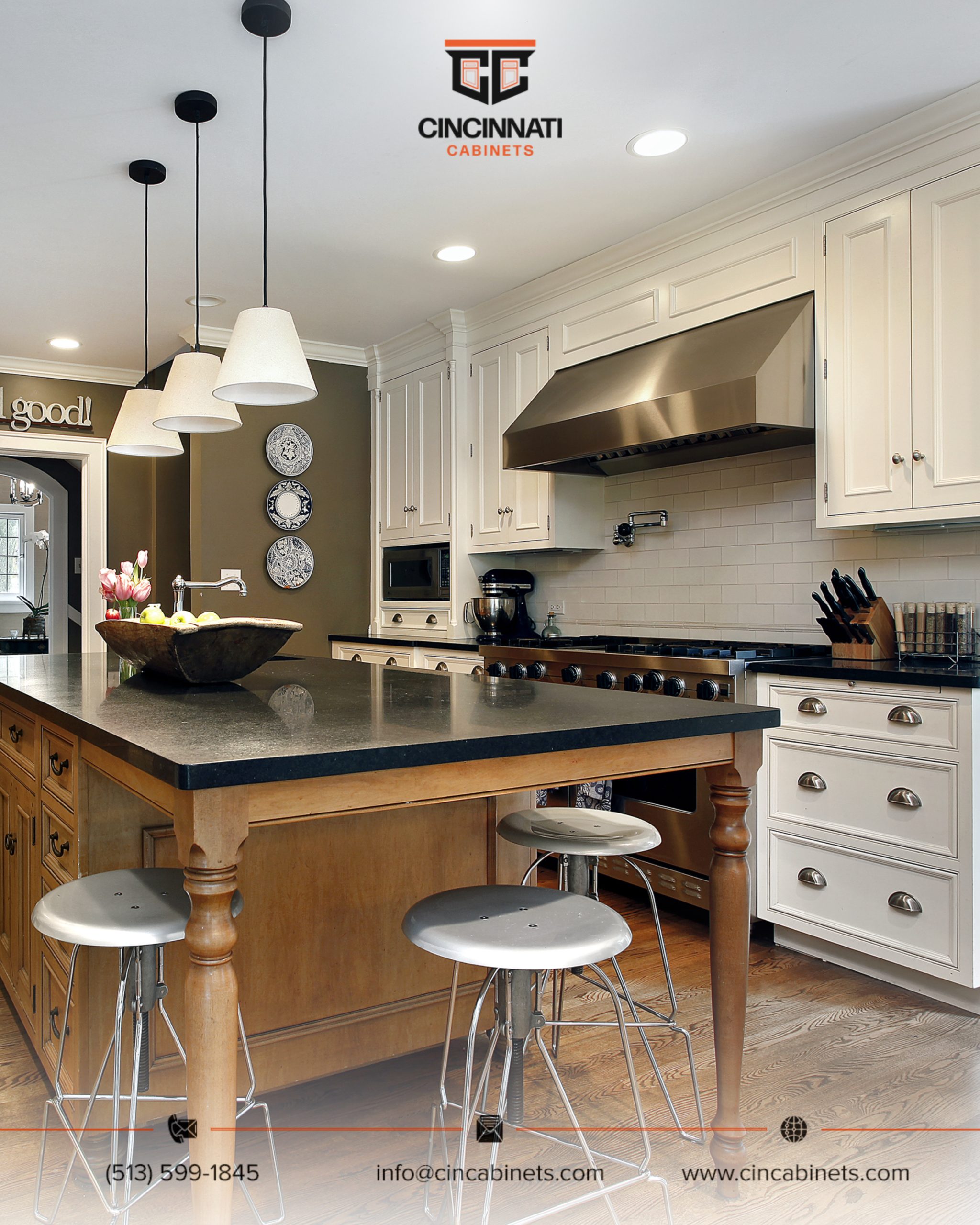
The best cabinet upgrades for kids or aging parents are deep drawers, pullout shelves, soft-close hardware, easy-grip pulls, lower storage zones, rounded edges, better lighting, and durable cabinet construction. These changes make the kitchen safer, easier to reach, and less frustrating for everyday routines.
At Cincinnati Cabinets, we look at how every person in the home actually uses the space. A kitchen that works for one adult may not work for small children, grandparents, or anyone who struggles with bending, reaching, lifting, or gripping. For families working with a cabinet contractor in Springfield, OH, the goal is not only a nicer kitchen. It is a kitchen that feels easier to live in every day.
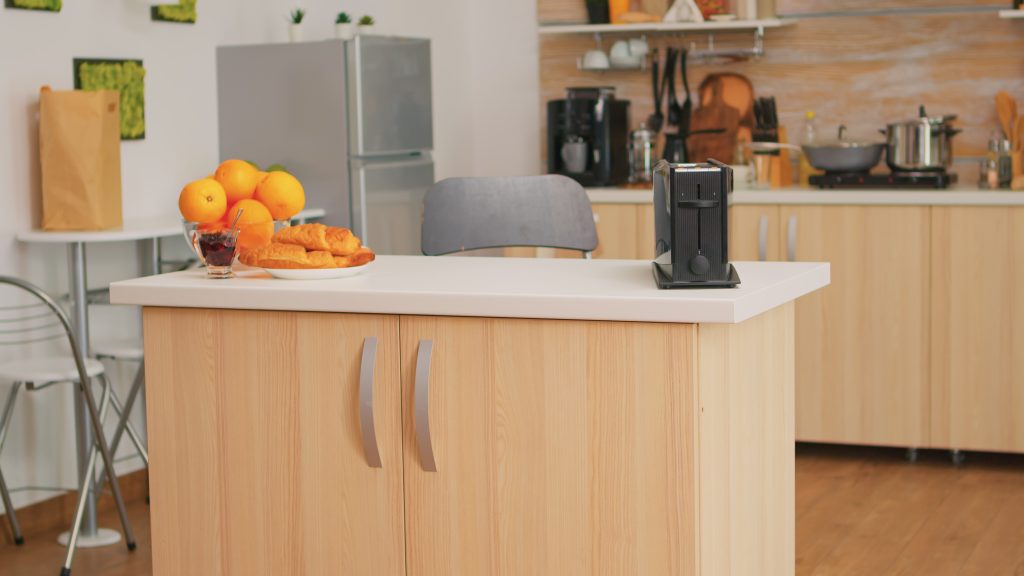
Which cabinet upgrades help kids use the kitchen safely?
Lower drawers and organized storage zones help kids use the kitchen more safely. When snacks, cups, plates, and lunch items are placed within reach, children are less likely to climb counters or pull items from high shelves.
This does not mean everything should be accessible. Cleaning products, sharp tools, and heavy cookware should be stored in controlled areas. The best layout gives children access to safe items while keeping risky items higher, locked, or away from busy paths.
| Cabinet Upgrade | How It Helps Kids |
|---|---|
| Lower snack drawer | Reduces climbing and reaching |
| Soft-close drawers | Prevents slamming and pinched fingers |
| Pullout trash cabinet | Keeps trash hidden and controlled |
| Rounded hardware | Reduces sharp edges |
| Deep drawer storage | Keeps items visible and easier to grab |
| Built-in organizers | Makes cleanup simpler |
A kid-friendly kitchen should support independence without creating new safety problems.
What cabinet upgrades help aging parents most?
Pullout shelves, deep drawers, easy-grip pulls, and lower storage help aging parents because they reduce bending, stretching, and heavy lifting. Accessibility is often about small movements repeated many times a day.
A deep drawer for pots is easier than a low cabinet where everything is stacked in the back. A pullout pantry is easier than reaching into a dark shelf. A wider handle is easier than a tiny knob when hands are stiff or tired.
For a cabinet contractor in Springfield, OH, the real design question is where effort can be removed. Good cabinet upgrades make daily tasks smoother without making the kitchen look clinical.
Are drawers better than doors for accessibility?
Drawers are usually better than doors for accessibility because they bring the contents out to the user. Doors require people to bend, crouch, and search inside the cabinet.
Deep drawers work well for pots, pans, food containers, mixing bowls, snacks, dish towels, and small appliances. Full-extension slides are important because they allow the drawer to open fully, so items in the back are not hidden. Soft-close hardware also helps prevent hard slamming.
| Storage Type | Best For | Accessibility Note |
|---|---|---|
| Deep drawers | Pots, pans, bowls | Easier to see and lift |
| Pullout shelves | Pantry goods, appliances | Reduces deep reaching |
| Standard doors | Light storage | Less accessible in lower cabinets |
| Vertical dividers | Trays, boards, lids | Keeps flat items upright |
| Lazy Susan | Corner cabinets | Helps use awkward space |
A cabinet door can still work well, but lower cabinets often become easier with drawers or pullouts.

Do pullout shelves really make a difference?
Pullout shelves make a big difference when storage is deep, low, or hard to see. They turn a cabinet from a dark box into a usable storage zone.
Pullouts work well for pantry items, small appliances, cleaning supplies, baking tools, and cookware. They are especially helpful for aging parents because they reduce bending and reaching. They also help kids because items stay more organized and easier to put back.
The key is weight. Pullouts should use strong slides and solid construction, especially when holding heavy cans, mixers, pots, or cleaning products.
What hardware is easiest for kids and aging parents?
Longer pulls are usually easier than small knobs because they give the hand more room to grip. Bar pulls, rounded pulls, and wider handles can be easier for people with smaller hands, weaker grip, or limited mobility.
Tiny knobs may look simple, but they can be harder to use on heavy drawers. Sharp-edged pulls may feel uncomfortable. Oversized pulls may look bulky on small doors, so the size should match the cabinet front.
Good hardware choices usually include:
- Larger pulls on deep drawers
- Rounded edges for comfort
- Consistent placement
- Easy grip spacing
- Strong attachment
- Simple finish that coordinates with appliances and fixtures
Hardware should be tested by hand, not chosen from a picture only.
Which cabinet materials are best for a family-friendly kitchen?
Plywood cabinet boxes and birch doors or drawer fronts are practical choices for family-friendly kitchens because they support strength, smooth finishes, and daily use. A kitchen used by kids, parents, and grandparents needs cabinets that can handle repeated opening, closing, bumping, cleaning, and storage weight.
Plywood boxes help support heavy drawers, countertops, and long-term use. Birch fronts can create smooth painted or stained cabinet doors. Soft-close hinges and full-extension slides also matter because they reduce wear and make storage easier.
At Cincinnati Cabinets, we usually recommend construction quality before decorative details. A beautiful cabinet door will not help much if the drawer slides fail or the box feels weak.
How do countertops affect a kid-friendly or aging-friendly kitchen?
Countertops affect daily comfort because they are used for cooking, cleanup, medication sorting, homework, snacks, and meal prep. Granite, quartz, and marble all offer different strengths, but the easiest surface depends on the household.
Quartz is often practical for busy families because it resists stains well and does not need sealing. Granite works well for heat resistance and natural movement. Marble can be beautiful, but it needs more care around acids, stains, and harsh cleaners.
| Countertop Material | Heat Resistance | Stain Resistance | Maintenance Level | Family Use Note |
|---|---|---|---|---|
| Granite | High | Good when sealed | Moderate | Strong for cooking areas |
| Quartz | Moderate | Very good | Low | Easy for daily cleanup |
| Marble | Good but sensitive | Moderate | Higher | Better for lower-traffic areas |
| Quartzite | High | Good when sealed | Moderate | Durable natural stone option |
Countertop fabrication should be planned with cabinet installation. Sink cutouts, edge profiles, overhangs, backsplash height, and seam placement all affect comfort and safety.
Can backsplash choices make the kitchen easier to maintain?
Backsplashes make the kitchen easier to maintain when they protect the wall and are simple to clean. A busy family kitchen needs surfaces that can handle splashes, sauce, soap, water, and daily wiping.
Quartz, granite, marble, tile, and slab-style backsplashes can all work depending on the design. For aging parents, easy cleaning matters because fewer grout lines may mean less scrubbing. For kids, a durable backsplash behind the sink or snack area can prevent wall damage.
Backsplashes should coordinate with the cabinets and countertops, but they should not add unnecessary visual clutter. A calm backsplash often makes the whole kitchen easier to navigate visually.
How much do accessibility-focused cabinet upgrades cost?
Basic cabinetry can start around $300 per linear foot, but final pricing depends on layout, material, door style, finish, hardware, storage inserts, installation, countertop fabrication, and backsplash work. Accessibility upgrades can increase the project cost, but they often make the kitchen much easier to use.
| Project Item | Typical Starting Range | What Affects Cost |
|---|---|---|
| Basic cabinetry | From about $300 per linear foot | Standard boxes and simple doors |
| Upgraded cabinetry | $450–$750+ per linear foot | Plywood, birch, better hardware |
| Storage-focused cabinetry | $700–$1,200+ per linear foot | Pullouts, drawers, dividers, pantry systems |
| Cabinet installation | $2,000–$6,000+ | Removal, leveling, trim, kitchen size |
| Countertop fabrication/install | $45–$100+ per sq. ft. | Granite, quartz, marble, sink cutouts |
Cincinnati Cabinets reviews the full layout before pricing because accessibility is not one feature. For a cabinet contractor in Springfield, OH, a useful estimate should explain cabinet construction, drawer upgrades, pullouts, hardware, installation, countertop fabrication, and backsplash coordination.
How long does a cabinet project take?
A cabinet project usually takes about 3-5 weeks after approval, depending on measurements, material availability, finish selection, storage details, delivery, installation, countertop coordination, and backsplash work. Projects with more pullouts, drawers, panels, or specialty storage may need more planning before approval.
Cabinets are usually installed before countertops. After the base cabinets are level and secure, granite, quartz, or marble countertops can be templated, fabricated, and installed. Backsplash work usually happens after countertop installation.
At Cincinnati Cabinets, we plan the order carefully because small accessibility details affect the final fit. For a cabinet contractor in Springfield, OH, the 3-5 week schedule should include design approval, cabinet installation, countertop fabrication, backsplash planning, and final adjustments.
What mistakes should families avoid when upgrading cabinets?
The biggest mistake is designing only for how the kitchen looks in photos. A family kitchen needs to work at breakfast, after school, during holidays, and on tired weekday evenings.
Another mistake is placing heavy items too high or too low. Pots, pans, small appliances, and pantry goods should be easy to reach without unsafe bending or climbing. Cabinet upgrades should reduce effort, not just add storage.
Before choosing upgrades, review:
- Who uses the kitchen daily
- Child-safe storage zones
- Lower drawer access
- Pullout shelf needs
- Hardware grip comfort
- Cleaning product storage
- Countertop maintenance
- Backsplash cleaning
- Walkway clearance
- Lighting near work zones
- Future aging needs
A good cabinet plan should make the kitchen easier for the youngest and oldest people in the home.

FAQ: Cabinet upgrades for kids and aging parents
What cabinet upgrade is best for aging parents?
Deep drawers and pullout shelves are usually the most helpful because they reduce bending, reaching, and searching.
Are soft-close cabinets worth it for families?
Yes. Soft-close hinges and slides reduce slamming, protect cabinets, and help prevent pinched fingers.
What hardware is easiest to use?
Longer pulls are usually easier than small knobs because they provide a better grip.
Are lower drawers good for kids?
Yes. Lower drawers can safely hold cups, plates, snacks, and lunch items so kids do not need to climb.
What materials are best for family cabinets?
Plywood cabinet boxes and birch doors or drawer fronts are practical because they support strength, smooth finishes, and daily use.
How much does cabinetry start at?
Basic cabinetry can start around $300 per linear foot. Final pricing depends on layout, materials, hardware, storage features, installation, and countertop work.
How long does cabinet installation take?
Many cabinet projects take about 3-5 weeks after approval, depending on materials, delivery, installation, countertop fabrication, and backsplash work.
What should I ask a cabinet contractor in Springfield, OH?
Ask about pullout shelves, deep drawers, plywood construction, birch components, soft-close hardware, easy-grip pulls, child-safe storage, countertop fabrication, backsplash planning, installation, and project timing.
Where can homeowners near Springfield, OH get help with family-friendly cabinet upgrades?
Cincinnati Cabinets is located near Cincinnati, OH and serves nearby communities, including Springfield, OH. We help homeowners work with a cabinet contractor in Springfield, OH to plan safer storage, choose plywood and birch cabinet construction, add pullouts and deep drawers, coordinate installation, handle countertop fabrication, and match cabinets with granite, quartz, marble, and backsplashes. Our team can help make a kitchen easier for kids, aging parents, and everyday family life.