


Kitchen and bathroom cabinets do not have to match exactly, but they should feel connected through color, style, material, or hardware. A home feels more intentional when the rooms speak the same design language, even when each room has its own personality.
At Cincinnati Cabinets, we usually tell homeowners not to copy the kitchen into every bathroom automatically. Kitchens and bathrooms have different lighting, moisture levels, storage needs, and countertop use. For homeowners planning kitchen cabinets in Springfield, OH, the better question is not “should everything match?” but “what should repeat, and what should change?”
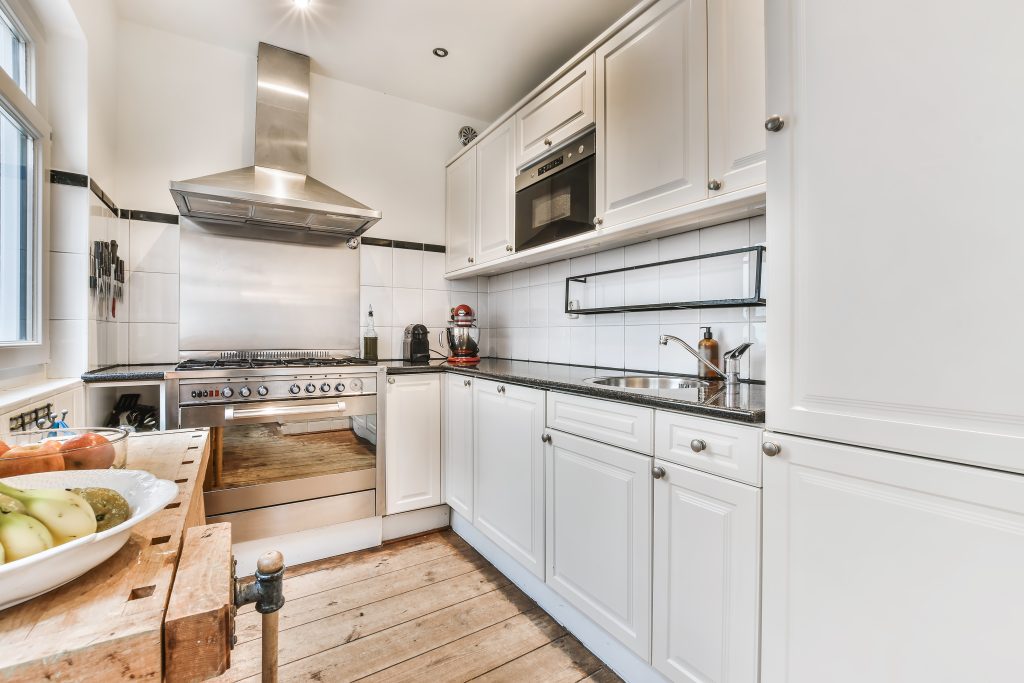
Do kitchen and bathroom cabinets need to be the same color?
Kitchen and bathroom cabinets do not need to be the same color. They can be different colors as long as the undertones work together.
For example, a warm white kitchen can pair well with a soft wood bathroom vanity. A greige kitchen can connect nicely with a taupe or cream bathroom cabinet. A navy bathroom vanity can work even if the kitchen is light, as long as the hardware, countertop, or tile keeps the home feeling consistent.
| Cabinet Color Approach | Best Use | Risk |
|---|---|---|
| Same color everywhere | Small homes, open layouts | Can feel repetitive |
| Same undertone, different shades | Most homes | Needs careful sample matching |
| Kitchen neutral, bathroom accent | Powder rooms or guest baths | Accent color may date faster |
| Wood in one room, paint in another | Warm modern homes | Wood tone must match flooring |
| Dark bathroom, light kitchen | Larger homes | Bathroom needs good lighting |
Matching is optional. Coordination is not.
When should kitchen and bathroom cabinets match?
Kitchen and bathroom cabinets should match when the home is small, the layout is open, or the owner wants a very consistent look. Matching can also help if the home is being prepared for resale and the goal is a clean, simple design.
This works especially well with classic colors like warm white, soft gray, greige, natural wood, or light taupe. These finishes feel calm from room to room and are easier to pair with granite, quartz, marble, and backsplashes.
When we design kitchen cabinets in Springfield, OH, we sometimes carry the same door style into bathroom vanities. That gives the home a consistent look without making every room identical.
When should bathroom cabinets be different?
Bathroom cabinets should be different when the bathroom has different lighting, size, flooring, tile, or function than the kitchen. A color that looks bright in a kitchen may feel too sharp in a small bathroom.
Powder rooms are also a good place to try something different. A guest bath can handle a deeper color, wood vanity, or more decorative hardware because it is a smaller space. Primary bathrooms often need a softer, calmer look because they are used every day.
Different does not mean random. The bathroom cabinet should still connect to the home through one or two repeated details.
What cabinet details should stay consistent?
Door style, hardware tone, wood undertone, or general color temperature should usually stay consistent. These details help the home feel planned.
A kitchen and bathroom can have different colors but the same Shaker door style. Or they can have different door styles but matching brushed nickel hardware. A white kitchen and wood bathroom vanity can work well when both finishes share warm undertones.
Good details to repeat include:
- Door profile
- Hardware finish
- Cabinet undertone
- Countertop color family
- Backsplash or tile tone
- Edge style
- Wood warmth
- Simple trim details
One repeated detail is often enough. Too much matching can make the design feel flat.

What cabinet materials work best in both kitchens and bathrooms?
Plywood cabinet boxes and birch doors or drawer fronts are practical choices for both kitchens and bathrooms. They support daily use, smoother finishes, and stronger installation.
Kitchens need cabinets that can handle heavy dishes, cookware, pantry items, and countertop weight. Bathrooms need cabinets that can handle moisture, cleaning products, towels, toiletries, and frequent drawer use. Weak cabinet construction shows up quickly in both spaces.
| Material or Feature | Kitchen Benefit | Bathroom Benefit |
|---|---|---|
| Plywood boxes | Strong support for storage and counters | Better stability around humidity |
| Birch fronts | Smooth paint or stain finish | Clean vanity appearance |
| Soft-close hinges | Reduces slamming | Protects smaller vanity doors |
| Full-extension slides | Easier access to cookware | Better access to toiletries |
| Finished panels | Cleaner exposed ends | More custom vanity look |
Cincinnati Cabinets usually recommends choosing construction quality before choosing the final color. A matching kitchen and bathroom still look poor if the cabinets shift, chip, or feel weak.
Should countertops match between kitchen and bathroom cabinets?
Countertops do not need to match exactly, but they should coordinate with the cabinet colors and the home’s overall palette. Granite, quartz, and marble can each work in both kitchens and bathrooms, but they behave differently.
Quartz is often practical in both spaces because it resists stains well and does not need sealing. Granite works well when homeowners want natural movement and strong heat resistance. Marble can look beautiful in bathrooms, but it needs more care because it can stain or etch.
| Countertop Material | Heat Resistance | Stain Resistance | Maintenance Level | Best Cabinet Pairing |
|---|---|---|---|---|
| Granite | High | Good when sealed | Moderate | Wood, white, cream, greige |
| Quartz | Moderate | Very good | Low | Modern, transitional, bathroom vanities |
| Marble | Good but sensitive | Moderate | Higher | Soft white, taupe, classic bathrooms |
| Quartzite | High | Good when sealed | Moderate | Statement kitchens or primary baths |
Countertop fabrication should be planned with cabinet installation. Sink cutouts, faucet holes, edge profiles, backsplash height, and seam placement all affect the finished look.
How do backsplashes and tile connect the rooms?
Backsplashes and tile connect rooms by repeating color, texture, or undertone. The kitchen backsplash and bathroom tile do not have to be identical, but they should not fight each other.
A warm white kitchen backsplash can connect with cream bathroom tile. A marble-look kitchen backsplash can connect with a bathroom vanity top. A simple subway tile in the kitchen can pair with handmade-look tile in the bathroom if the colors feel related.
Backsplashes also affect maintenance. Kitchen backsplashes protect walls from cooking splatter and water. Bathroom backsplashes protect walls from sink splashes, toothpaste, soap, and daily moisture.
How much do coordinated kitchen and bathroom cabinets cost?
Basic cabinetry can start around $300 per linear foot, but final pricing depends on layout, room count, material, door style, finish, hardware, storage features, installation, countertop fabrication, and backsplash work. Matching rooms can sometimes simplify decisions, but it does not automatically make the project cheaper.
| Project Item | Typical Starting Range | What Affects Cost |
|---|---|---|
| Basic cabinetry | From about $300 per linear foot | Standard boxes and simple doors |
| Upgraded cabinetry | $450–$750+ per linear foot | Plywood, birch, better hardware |
| Storage-focused cabinetry | $700–$1,200+ per linear foot | Drawers, pullouts, pantry systems |
| Cabinet installation | $2,000–$6,000+ | Removal, leveling, trim, room size |
| Countertop fabrication/install | $45–$100+ per sq. ft. | Granite, quartz, marble, sink cutouts |
Cincinnati Cabinets reviews each room before pricing because kitchens and bathrooms have different needs. For kitchen cabinets in Springfield, OH, a useful estimate should explain cabinet construction, vanity options, countertop fabrication, installation, hardware, backsplash planning, and project timing.
How long does a cabinet project take?
A cabinet project usually takes about 3-5 weeks after approval, depending on measurements, material availability, finish selection, delivery, installation, countertop coordination, and backsplash work. Projects that include both kitchen and bathroom cabinets may need more planning time.
The normal sequence starts with measurements and design approval. Cabinets are installed first. After base cabinets and vanities are secure and level, granite, quartz, or marble countertops can be templated, fabricated, and installed. Backsplash work usually comes after countertops.
At Cincinnati Cabinets, we plan kitchens and bathrooms together when the homeowner wants a connected look. For kitchen cabinets in Springfield, OH, the 3-5 week timeline should include design decisions, cabinet installation, countertop fabrication, backsplash coordination, and final adjustments.
What mistakes make matching cabinets look boring?
Matching cabinets look boring when every room uses the same color, same hardware, same countertop, and same backsplash without considering room size or lighting. Consistency should not erase personality.
Another mistake is using the kitchen cabinet color in a bathroom where the light is completely different. A white that looks soft in the kitchen may look cold under bathroom lighting. A dark color that looks rich in a kitchen may make a small bathroom feel closed in.
Before deciding, compare:
- Cabinet samples in each room
- Natural and artificial lighting
- Bathroom tile color
- Kitchen backsplash sample
- Countertop material
- Flooring undertone
- Hardware finish
- Vanity size
- Storage needs
- Cleaning habits
Each room should feel related, not copied.
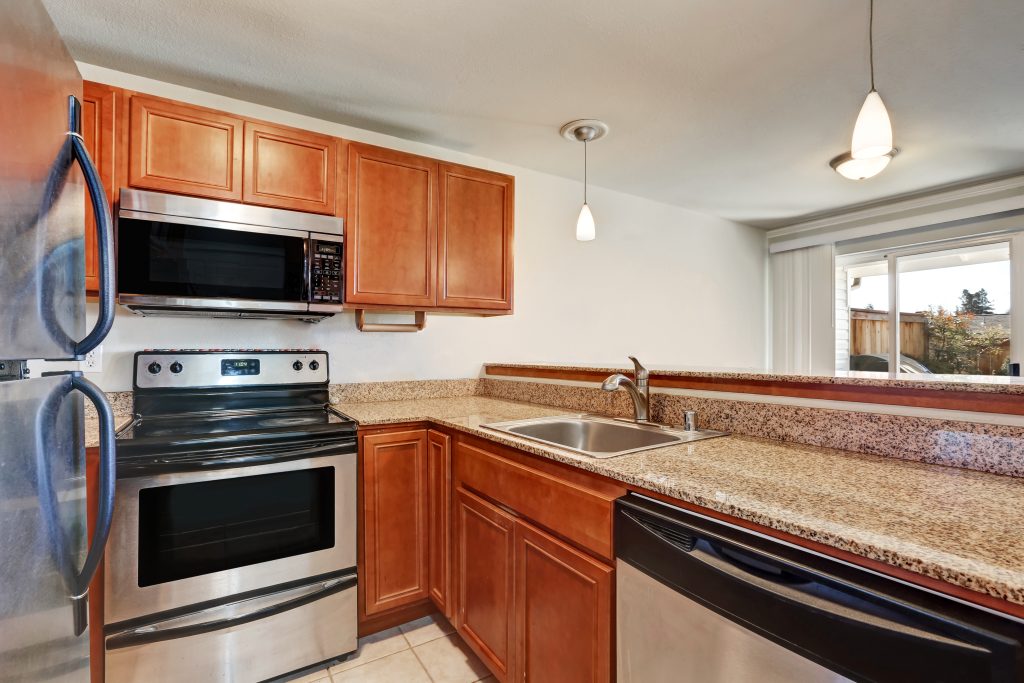
FAQ: Should kitchen and bathroom cabinets match?
Should kitchen and bathroom cabinets be the same color?
No. They can be different colors as long as the undertones, hardware, countertops, or door styles coordinate.
Is it better to match cabinets for resale?
A coordinated look is usually safer for resale than a very bold mix. Exact matching is not always necessary.
Can bathroom cabinets be darker than kitchen cabinets?
Yes. Bathrooms, especially powder rooms, can handle darker vanities when lighting and tile choices support the color.
Should cabinet hardware match in every room?
It should coordinate, but it does not have to be identical. Similar metal tones often work better than exact matching.
What cabinet materials work well in kitchens and bathrooms?
Plywood cabinet boxes and birch doors or drawer fronts are practical because they support strength, smooth finishes, and daily use.
How much does cabinetry start at?
Basic cabinetry can start around $300 per linear foot. Final pricing depends on layout, materials, finish, hardware, storage features, installation, and countertop work.
How long does cabinet installation take?
Many cabinet projects take about 3-5 weeks after approval, depending on materials, delivery, installation, countertop fabrication, and backsplash work.
What should I ask before ordering kitchen cabinets in Springfield, OH?
Ask about matching versus coordinating, plywood construction, birch components, door styles, vanity options, hardware, countertop fabrication, backsplash planning, installation, and project timing.
Where can homeowners near Springfield, OH get help coordinating kitchen and bathroom cabinets?
Cincinnati Cabinets is located near Cincinnati, OH and serves nearby communities, including Springfield, OH. We help homeowners plan kitchen cabinets in Springfield, OH, choose plywood and birch cabinet construction, coordinate bathroom vanities, handle installation, plan countertop fabrication, and match cabinets with granite, quartz, marble, and backsplashes. Our team can help the kitchen and bathroom feel connected without making every room look exactly the same.