

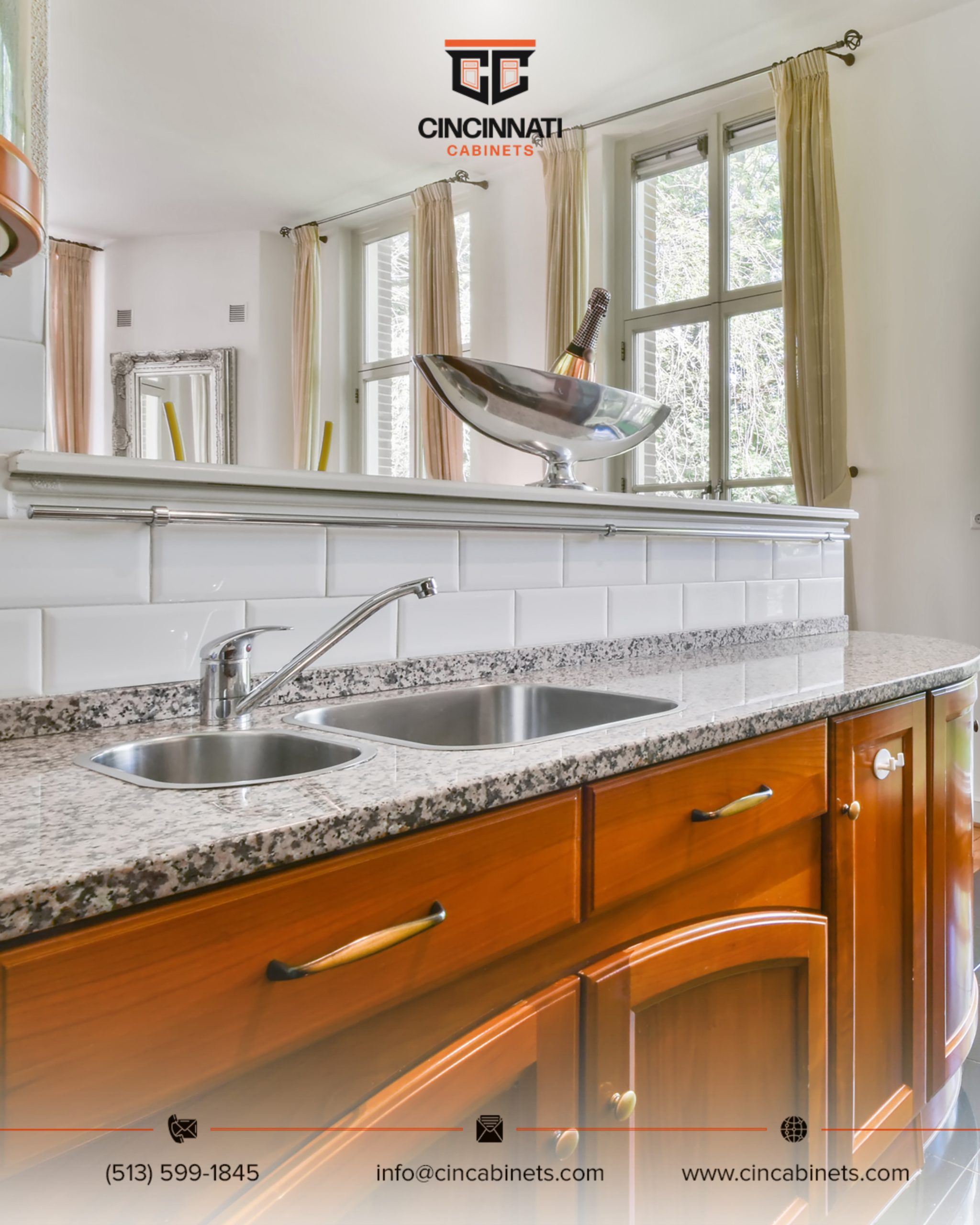
The cabinet features that keep countertops less cluttered are the ones that give everyday items a real place to go. Deep drawers, pullout trash, pantry rollouts, appliance storage, tray dividers, spice pullouts, and drawer organizers usually make the biggest difference.
At Cincinnati Cabinets, we often tell homeowners that clutter is not always a cleaning problem. It is usually a storage problem. If the toaster, cutting boards, snacks, coffee supplies, mail, and plastic containers live on the counter, the kitchen probably needs better cabinet planning. For homeowners choosing cabinets in Beavercreek, OH, the goal should be simple: make putting things away easier than leaving them out.
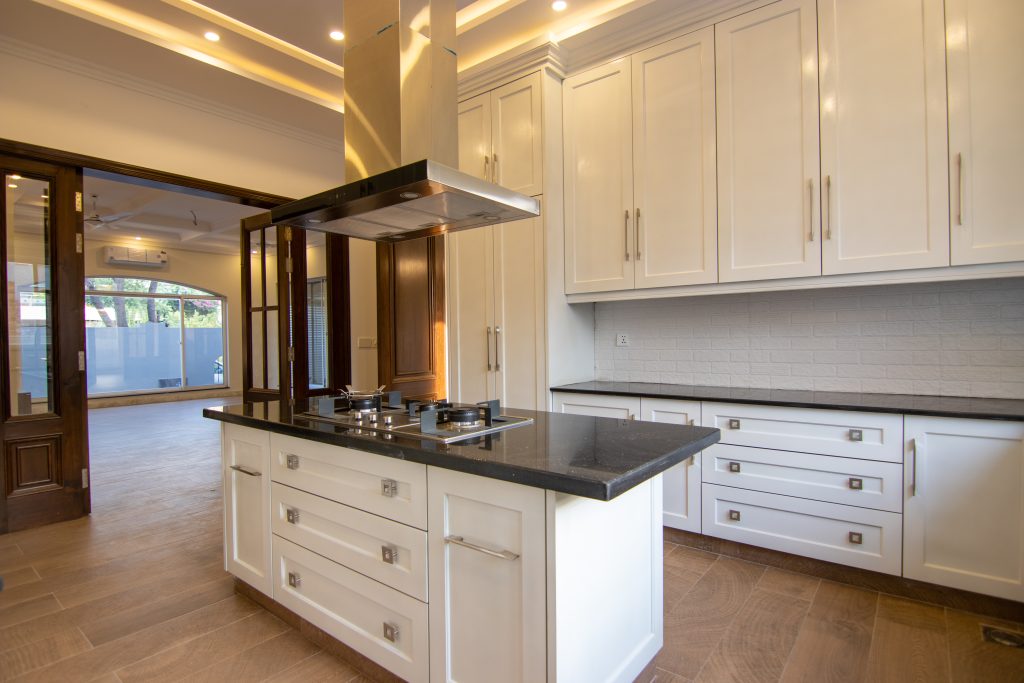
Which cabinet feature clears countertops the fastest?
A pullout trash and recycling cabinet clears countertops fastest because it gives food scraps, packaging, and daily mess a hidden place near the prep zone. When trash is too far away, small messes stay on the counter longer.
This feature works best near the sink, island, or main cutting area. It helps during cooking, lunch packing, cleanup, and grocery unloading. It also keeps a visible trash can off the floor, which makes the whole kitchen feel cleaner.
| Cabinet Feature | Clutter Problem It Solves | Best Location |
|---|---|---|
| Pullout trash | Food scraps, wrappers, visible bins | Prep zone or sink area |
| Deep drawers | Pots, pans, containers | Near range or dishwasher |
| Pantry rollouts | Snacks and dry goods | Pantry wall |
| Appliance garage | Toaster, blender, coffee tools | Counter corner or beverage zone |
| Tray dividers | Cutting boards and baking sheets | Lower cabinet or tall cabinet |
For cabinets in Beavercreek, OH, we usually place trash storage early in the design, not as an afterthought. It affects how the kitchen works every day.
Do deep drawers really reduce countertop clutter?
Yes, deep drawers reduce countertop clutter because they make storage easy to see, reach, and use. Items are less likely to stay on the counter when they can be put away without bending, digging, or moving everything in front.
Deep drawers work well for pots, pans, lids, food containers, mixing bowls, dishes, towels, and small appliances. Full-extension slides are especially useful because the drawer opens all the way, giving access to the back.
Lower cabinets with fixed shelves can still work, but they often become clutter traps. A deep drawer gives the kitchen a cleaner rhythm: open, place, close, done.
Are appliance garages worth it?
Appliance garages are worth it when small appliances are used often but do not need to stay visible all day. They can hide coffee makers, toasters, blenders, mixers, and charging stations while keeping those items easy to access.
The best appliance garage is not too deep, too narrow, or placed in a dead corner where it becomes annoying to use. It should sit near outlets and close to the area where the appliance is actually used.
A coffee station is a good example. Mugs, filters, pods, sugar, and the machine can all live in one planned zone. The counter looks cleaner because the supplies are not scattered across several cabinets.
What pantry features keep food off the counter?
Pantry rollouts, shallow shelves, door racks, and drawer-style pantry storage keep food off the counter by making items easier to see. Clutter often happens when people cannot find what they already own.
A deep pantry shelf can hide snacks, cans, pasta boxes, and baking items in the back. Then duplicates get purchased, and extra food ends up sitting on the counter or floor. Rollouts solve that by bringing the full shelf forward.
For cabinets in Beavercreek, OH, pantry planning should match the household. A family with kids may need snack drawers. A frequent cook may need dry goods near the prep zone. Someone who bakes may need flour, sugar, trays, and mixing bowls grouped together.
Which cabinet organizers help the most?
The most useful cabinet organizers are the ones tied to daily routines. Drawer inserts, spice pullouts, tray dividers, lid organizers, and vertical storage can all help, but they should not be added randomly.
A kitchen with too many specialty inserts can become expensive without becoming easier to use. The best organizers solve a specific problem.
Helpful organizers include:
- Tray dividers for baking sheets and cutting boards
- Drawer inserts for utensils and cooking tools
- Spice pullouts near the range
- Lid organizers for pots and containers
- Rollout shelves for pantry goods
- Vertical storage for boards and platters
- Sink-base pullouts for cleaning supplies
At Cincinnati Cabinets, we prefer practical storage over novelty storage. If an organizer removes a daily irritation, it is usually worth considering.
Why do cabinet materials matter for clutter control?
Cabinet materials matter because storage features only work well when the cabinet structure can support them. Plywood cabinet boxes and birch components are practical choices for kitchens with drawers, pullouts, pantry systems, and stone countertops.
A deep drawer filled with plates is heavy. A pantry pullout filled with cans is heavy. A cabinet that supports granite, quartz, or marble countertops needs to be stable, level, and strong.
| Material or Feature | Daily Benefit | Why It Matters |
|---|---|---|
| Plywood boxes | Strong cabinet structure | Supports drawers and countertops |
| Birch components | Smooth finish surface | Works well for doors and panels |
| Full-extension slides | Better access | Reduces forgotten items |
| Soft-close hinges | Less slamming | Protects doors and frames |
| Adjustable shelves | Flexible storage | Changes with household needs |
Cincinnati Cabinets looks at cabinet construction before adding storage upgrades. A pullout is only useful if it moves smoothly and holds up to daily use.

How do countertops affect cabinet clutter?
Countertops affect clutter because the right cabinet plan protects the countertop from becoming storage space. Granite, quartz, marble, and quartzite look better and work better when daily items have homes inside the cabinets.
Quartz is low-maintenance and works well for busy kitchens. Granite is durable and heat-resistant. Marble looks soft and elegant but needs more care. Quartzite can create a strong natural stone look, but it should be supported properly.
| Countertop Material | Heat Resistance | Stain Resistance | Cabinet Planning Need |
|---|---|---|---|
| Granite | High | Good when sealed | Strong, level base cabinets |
| Quartz | Moderate | Very good | Stable support and heat protection |
| Marble | Good but sensitive | Moderate | Careful cleaning and support |
| Quartzite | High | Good when sealed | Strong support and sealing plan |
With cabinets in Beavercreek, OH, countertop planning should happen early. Fabrication depends on accurate cabinet installation, sink placement, appliance openings, edge profiles, and backsplash decisions.
What backsplash choices help countertops look cleaner?
Simple backsplashes help countertops look cleaner because they reduce visual noise. A busy backsplash can make a counter feel crowded even when it is mostly clear.
Soft white tile, pale gray tile, beige tile, simple handmade-look tile, or a quartz backsplash can work well. If the countertop has movement, the backsplash should usually stay quiet. If the countertop is plain, the backsplash can add soft texture without creating clutter.
Backsplash planning also affects outlets, lighting, wall protection, and cleaning. It should be coordinated with cabinets and countertops before installation.
How much do clutter-reducing cabinet features cost?
Basic cabinetry can start around $300 per linear foot, but clutter-reducing features can raise the final price depending on layout, materials, hardware, storage inserts, installation, countertop coordination, and backsplash work. Pullouts, deep drawers, pantry systems, and appliance garages usually cost more than standard shelves.
| Project Item | Typical Starting Range | What Affects Cost |
|---|---|---|
| Basic cabinetry | From about $300 per linear foot | Standard boxes and simple shelves |
| Upgraded cabinetry | $450–$750+ per linear foot | Plywood, birch, soft-close hardware |
| Storage-focused cabinetry | $700–$1,200+ per linear foot | Pullouts, drawers, pantry systems |
| Cabinet installation | $2,000–$6,000+ | Removal, leveling, trim, kitchen size |
| Countertop fabrication/install | $45–$100+ per sq. ft. | Granite, quartz, marble, cutouts |
Cincinnati Cabinets helps homeowners decide which features are worth paying for first. A hidden trash pullout, deep drawers, and pantry rollouts often improve daily life more than decorative extras.
How long does a cabinet project take?
A cabinet project usually takes about 3 to 5 weeks after approval, depending on measurements, material availability, finish selection, delivery, installation, and countertop coordination. More storage features can affect timing if specialty parts are needed.
Cabinets are installed first. After the base cabinets are level and secure, granite, quartz, or marble countertops can be templated, fabricated, and installed. Backsplash work usually follows after the countertop is in place.
For cabinets in Beavercreek, OH, the schedule should include design approval, cabinet installation, countertop fabrication, sink cutouts, backsplash planning, and final adjustments.
FAQ: Cabinet features that reduce countertop clutter
What cabinet feature reduces clutter the most?
Pullout trash, deep drawers, pantry rollouts, and appliance storage usually reduce countertop clutter the most.
Are deep drawers better than shelves?
Yes. Deep drawers make cookware, dishes, containers, and tools easier to see and put away.
Are appliance garages practical?
Yes, if they are placed near outlets and used for appliances that would otherwise stay on the counter.
What material is best for strong cabinets?
Plywood cabinet boxes and birch components are practical choices for strength, stability, and smooth finishes.
How much do cabinets start at?
Basic cabinetry can start around $300 per linear foot. Final pricing depends on materials, layout, hardware, storage features, and installation.
How long does cabinet installation take?
Many cabinet projects take about 3 to 5 weeks after approval, depending on materials, delivery, installation, countertops, and backsplash work.
Should cabinets be planned with countertops?
Yes. Granite, quartz, and marble countertops need stable cabinet support, accurate measurements, fabrication, and professional installation.
Where can homeowners near Beavercreek, OH get help with clutter-reducing cabinets?
Cincinnati Cabinets is located near Cincinnati, OH and serves nearby communities, including Beavercreek, OH. We help homeowners plan cabinets in Beavercreek, OH, compare plywood and birch construction, add practical storage features, coordinate installation, and match cabinets with granite, quartz, marble, and backsplashes. Our team can help design a kitchen where the countertops stay clearer because the cabinets finally do their job.