


Choose a calm countertop when the kitchen already has strong cabinet color, visible wood grain, patterned flooring, or a busy backsplash. Choose a statement countertop when the cabinets are simple, the room needs a focal point, and the countertop can become the main design feature without making the kitchen feel crowded.
At Cincinnati Cabinets, we help homeowners make this decision by looking at the full kitchen, not just one slab sample. A countertop that looks stunning alone can feel overwhelming once it is placed next to cabinet doors, hardware, flooring, lighting, and backsplash tile. For anyone working with a cabinet company in Beavercreek, OH, the best choice starts with one question: should the countertop support the cabinets or lead the whole design?

What is a calm countertop?
A calm countertop has soft movement, low contrast, and a color that blends naturally with the rest of the kitchen. It does not demand attention immediately, but it makes the whole room feel more balanced.
Calm countertops are often warm white, cream, beige, pale gray, taupe, light greige, or softly veined quartz. They work well when the kitchen already has detailed cabinet doors, natural wood, dark cabinet colors, or a strong backsplash.
| Calm Countertop Feature | What It Does | Best Use |
|---|---|---|
| Low contrast | Keeps the kitchen quiet | Small kitchens |
| Soft veining | Adds movement without noise | Transitional designs |
| Light neutral color | Brightens the room | Darker cabinet colors |
| Simple pattern | Supports other finishes | Detailed cabinet doors |
| Subtle finish | Reduces visual clutter | Busy family kitchens |
A calm countertop is not boring. It simply lets the kitchen breathe.
What is a statement countertop?
A statement countertop has bold veining, strong contrast, dramatic color, heavy movement, or a unique natural pattern. It becomes one of the first things people notice when they enter the room.
Statement countertops can look beautiful on islands, waterfall edges, large open kitchens, and simple cabinet layouts. They work best when the cabinets, backsplash, and flooring stay controlled.
A dramatic granite, bold marble-look quartz, or striking natural stone can give the kitchen personality. The risk is overdoing it. If every surface is trying to stand out, the room can feel busy instead of designed.
When should cabinets stay simple?
Cabinets should stay simple when the countertop is meant to be the main feature. Flat panel, slim Shaker, or simple Shaker doors usually work best with bold countertop patterns.
A statement countertop needs visual space. Busy cabinet profiles, ornate hardware, and strong backsplash tile can compete with dramatic stone. This is why cabinet planning and countertop selection should happen together.
For homeowners choosing a cabinet company in Beavercreek, OH, we usually recommend selecting cabinet door style, cabinet color, countertop movement, and backsplash direction in one design conversation. Separating those decisions can lead to a kitchen where each part looks good alone but not together.
When should the countertop stay calm?
The countertop should stay calm when the cabinets already have strong personality. Dark green cabinets, navy cabinets, walnut cabinets, oak grain, glass cabinet doors, or detailed trim can all benefit from a quieter surface.
A calm countertop can also help if the kitchen is small, narrow, or has low ceilings. Too much pattern in a tight room can make the space feel smaller. Soft quartz, light granite, or subtle marble-look surfaces can keep the kitchen clean and open.
| Kitchen Situation | Better Countertop Choice | Reason |
|---|---|---|
| Detailed cabinet doors | Calm countertop | Avoids too much visual detail |
| Flat panel cabinets | Calm or statement | Simple doors can support either |
| Small kitchen | Usually calm | Keeps the room open |
| Large island | Statement can work | More space for pattern |
| Busy backsplash | Calm countertop | Prevents visual overload |
The countertop should solve a design problem, not create one.
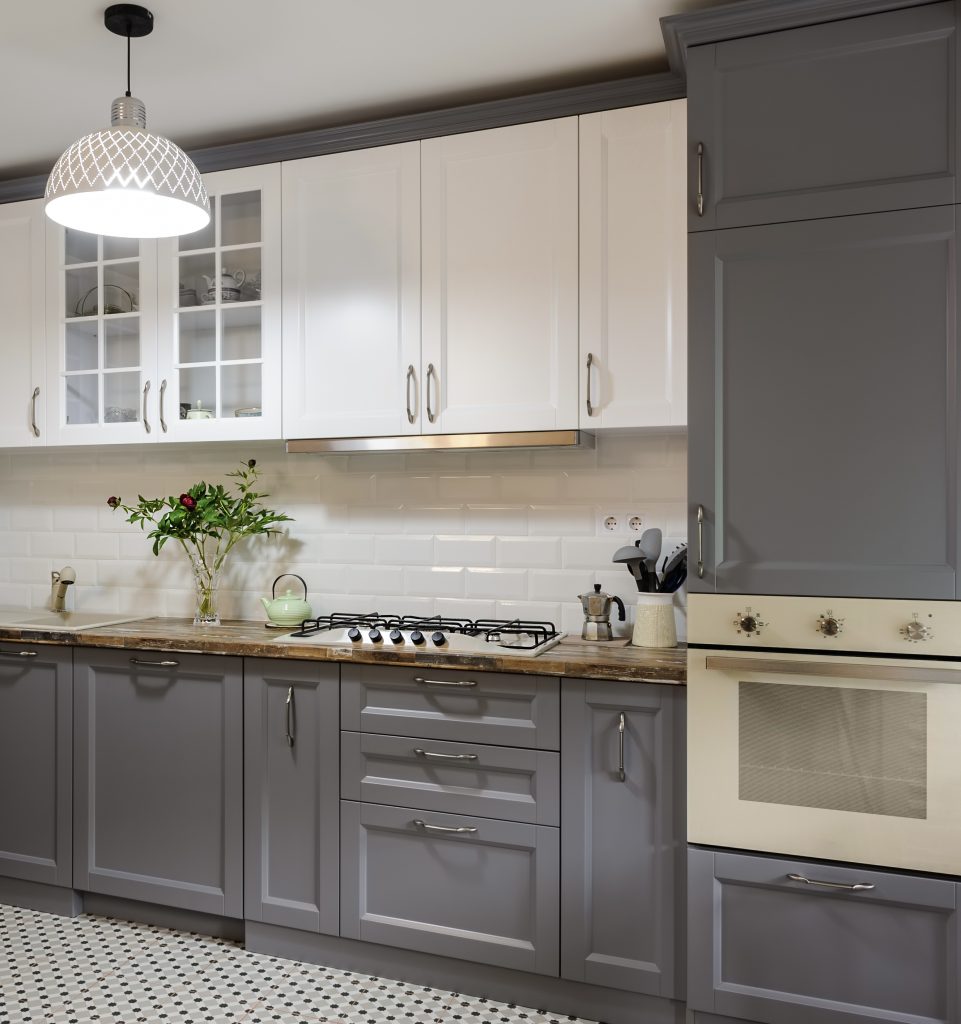
How do granite, quartz, and marble compare for calm or statement looks?
Granite, quartz, and marble can all be calm or dramatic depending on the slab or pattern. The material name does not decide the look by itself.
Granite can be quiet with soft mineral movement or bold with heavy contrast. Quartz can be simple and consistent or designed with large marble-style veining. Marble can be subtle and classic or dramatic and high-contrast.
| Material | Calm Look | Statement Look | Daily Use Note |
|---|---|---|---|
| Granite | Light gray, beige, soft white patterns | Strong mineral movement | Durable and heat-resistant |
| Quartz | Warm white, pale gray, soft veining | Bold marble-look veins | Low maintenance |
| Marble | Soft white with gentle veining | High-contrast natural veins | More sensitive to stains and etching |
| Quartzite | Light natural movement | Dramatic veining and depth | Strong, but sealing may be needed |
Cincinnati Cabinets helps homeowners compare countertop options with cabinet samples because the same stone can feel calm in one kitchen and too loud in another.
Does countertop durability change with the design choice?
Durability depends more on the material than the pattern. A calm quartz and a bold quartz usually perform similarly if they come from the same product type. A calm marble and a dramatic marble both still need careful cleaning.
The design choice affects how forgiving the surface looks. A countertop with some movement may hide crumbs, water spots, and light marks better than a flat solid color. A very bold pattern may hide mess well, but it can also dominate the room.
| Material | Heat Resistance | Stain Resistance | Maintenance Level |
|---|---|---|---|
| Granite | High | Good when sealed | Moderate |
| Quartz | Moderate | Very good | Low |
| Marble | Good but sensitive | Moderate | Higher |
| Quartzite | High | Good when sealed | Moderate |
A countertop should look good on installation day and still feel practical during normal cooking, cleaning, and daily use.
How should backsplash choices affect the decision?
A backsplash should usually balance the countertop. If the countertop is calm, the backsplash can add texture or a little pattern. If the countertop is dramatic, the backsplash should usually stay simple.
A bold countertop with a bold backsplash can make the kitchen feel crowded. A quiet countertop with a quiet backsplash can work, but it may need cabinet color, hardware, or lighting to keep the room from feeling flat.
Good pairings include:
- Bold countertop with simple tile backsplash
- Calm countertop with lightly textured backsplash
- Marble-look quartz with soft white or pale gray tile
- Granite with warm neutral backsplash
- Light quartz with wood or painted cabinets
- Simple countertop with more expressive cabinet hardware
Backsplashes are not an afterthought. They connect the cabinets and countertop visually.
How do cabinet materials affect the final look?
Plywood and birch affect the final look because strong cabinet construction supports both design and function. Plywood cabinet boxes create stable structure, while birch components provide a smooth surface for painted or stained doors and panels.
A statement countertop needs a strong, level base before fabrication and installation. Granite, quartz, and marble must sit on properly installed cabinets. Poor alignment can affect seams, overhangs, sink cutouts, and the final countertop fit.
| Cabinet Material or Feature | Why It Matters |
|---|---|
| Plywood boxes | Strong base for countertops and drawers |
| Birch components | Smooth finish for doors and panels |
| Soft-close hinges | Reduces slamming and daily wear |
| Full-extension slides | Improves access to storage |
| Professional installation | Supports accurate countertop fabrication |
A countertop decision is also a cabinet decision. The two should be planned as one working system.
How much should homeowners budget?
Basic cabinetry can start around $300 per linear foot, but the final cost depends on layout, materials, cabinet height, finish, hardware, storage features, installation, countertop coordination, and backsplash work. Statement designs may also affect the budget if they require specialty stone, waterfall panels, more detailed slab layout, or additional fabrication.
| Project Item | Typical Starting Range | What Affects Cost |
|---|---|---|
| Basic cabinetry | From about $300 per linear foot | Standard layout and simple doors |
| Upgraded cabinetry | $450–$750+ per linear foot | Plywood, birch, soft-close hardware |
| Storage-focused cabinetry | $700–$1,200+ per linear foot | Pullouts, deep drawers, pantry systems |
| Cabinet installation | $2,000–$6,000+ | Removal, leveling, trim, kitchen size |
| Countertop fabrication/install | $45–$100+ per sq. ft. | Granite, quartz, marble, cutouts |
Cincinnati Cabinets helps homeowners compare the design impact of each cost. For someone choosing a cabinet company in Beavercreek, OH, it may be smarter to invest in stronger cabinets and a calmer countertop than to overspend on a dramatic stone that fights the room.
How long does the project take?
A cabinet project usually takes about 3 to 5 weeks after approval, depending on measurements, material availability, finish selection, delivery, installation, and countertop coordination. Specialty storage, detailed cabinet finishes, or complex countertop layouts can affect timing.
The usual order is cabinet approval, cabinet installation, countertop templating, fabrication, countertop installation, and backsplash work. Granite, quartz, and marble countertops are usually measured after base cabinets are installed and level.
At Cincinnati Cabinets, we plan the sequence early so the countertop decision does not delay the whole project. For homeowners working with a cabinet company in Beavercreek, OH, the schedule should include cabinets, fabrication, installation, backsplashes, plumbing coordination, and final adjustments.
How do I make the final choice?
Choose the calm countertop if you want a kitchen that feels peaceful, flexible, and easy to update over time. Choose the statement countertop if the cabinets are simple and the stone truly adds something the room needs.
A practical final check should include:
- Cabinet door sample
- Countertop sample or full slab photo
- Backsplash sample
- Flooring tone
- Hardware finish
- Natural and artificial lighting
- Kitchen size and ceiling height
- Cleaning and maintenance expectations
The right countertop should fit the kitchen’s daily life, not only the mood board.

FAQ: Calm vs statement countertops
Is a calm countertop better for resale?
A calm countertop is often safer for resale because it works with more cabinet colors, backsplash styles, and buyer preferences.
When should I choose a statement countertop?
Choose a statement countertop when cabinets, flooring, and backsplash are simple enough to let the stone become the focal point.
Can a small kitchen have a bold countertop?
Yes, but the pattern should be chosen carefully. Too much contrast can make a small kitchen feel crowded.
What cabinet style works best with bold countertops?
Flat panel, slim Shaker, or simple Shaker cabinets usually work best because they do not compete with the countertop.
How much does cabinetry start at?
Basic cabinetry can start around $300 per linear foot. Final pricing depends on layout, materials, finish, hardware, installation, and storage features.
How long does a cabinet project take?
Many cabinet projects take about 3 to 5 weeks after approval, depending on materials, delivery, installation, countertops, and backsplash work.
What should I ask a cabinet company in Beavercreek, OH before choosing countertops?
Ask how the cabinet color, door style, plywood or birch construction, countertop material, fabrication, installation, and backsplash plan will work together.
Where can homeowners near Beavercreek, OH get help choosing cabinets and countertops?
Cincinnati Cabinets is located near Cincinnati, OH and serves nearby communities, including Beavercreek, OH. We help homeowners work with a cabinet company in Beavercreek, OH, compare calm and statement countertop options, choose plywood and birch cabinet construction, coordinate installation, and match cabinets with granite, quartz, marble, and backsplashes.