

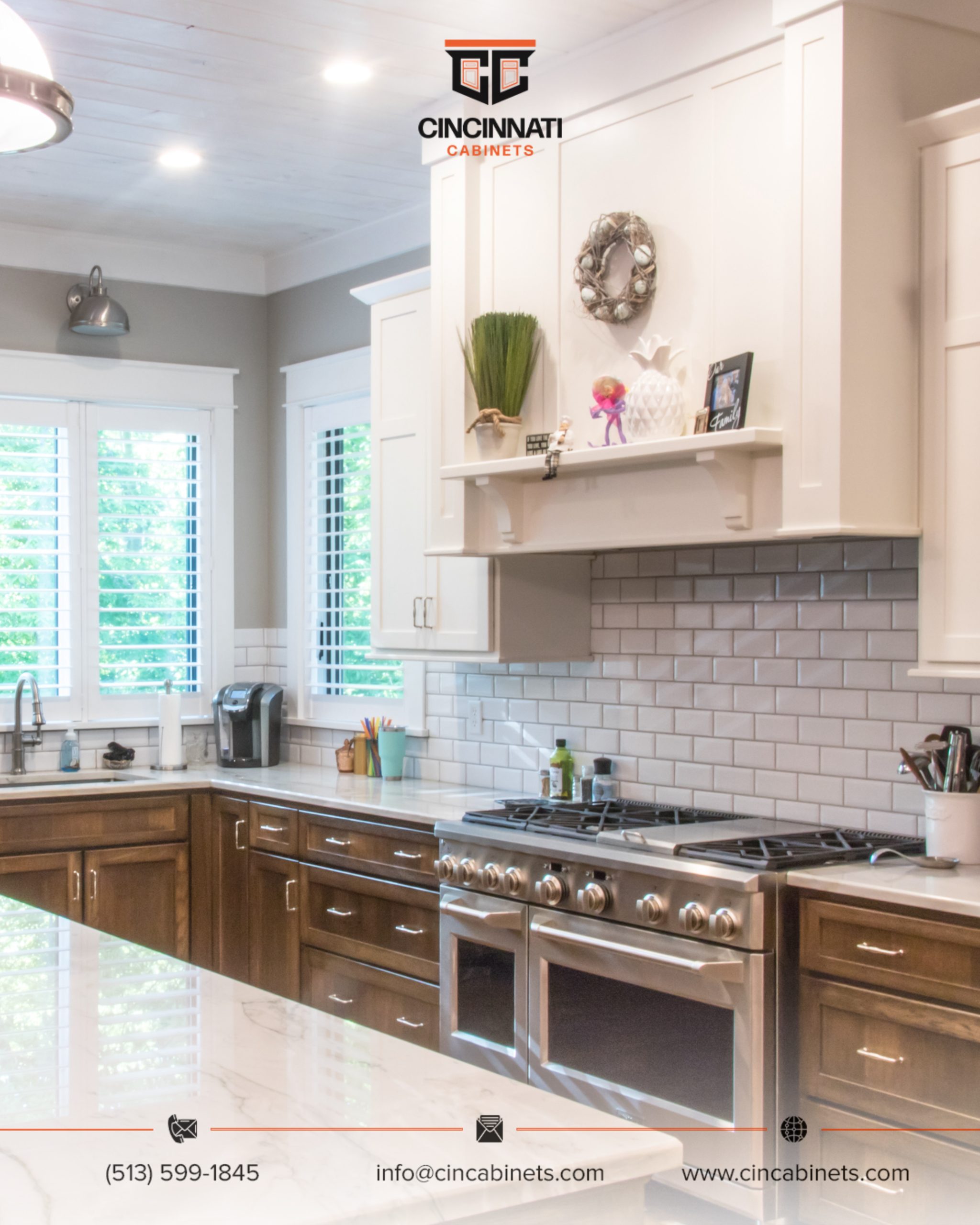
Framed cabinets have a face frame attached to the front of the cabinet box, while frameless cabinets do not. Framed cabinets usually feel more traditional and structured, while frameless cabinets create a cleaner, more modern look with slightly more interior access.
At Cincinnati Cabinets, we explain the difference in practical terms because homeowners usually care about how the cabinet looks, how much storage it gives them, how easy it is to clean, and how well it supports daily use. For homeowners comparing custom cabinet doors in Kettering, OH, the choice between framed and frameless cabinets should be based on style, storage needs, construction quality, countertop plans, and budget.
What are framed cabinets?
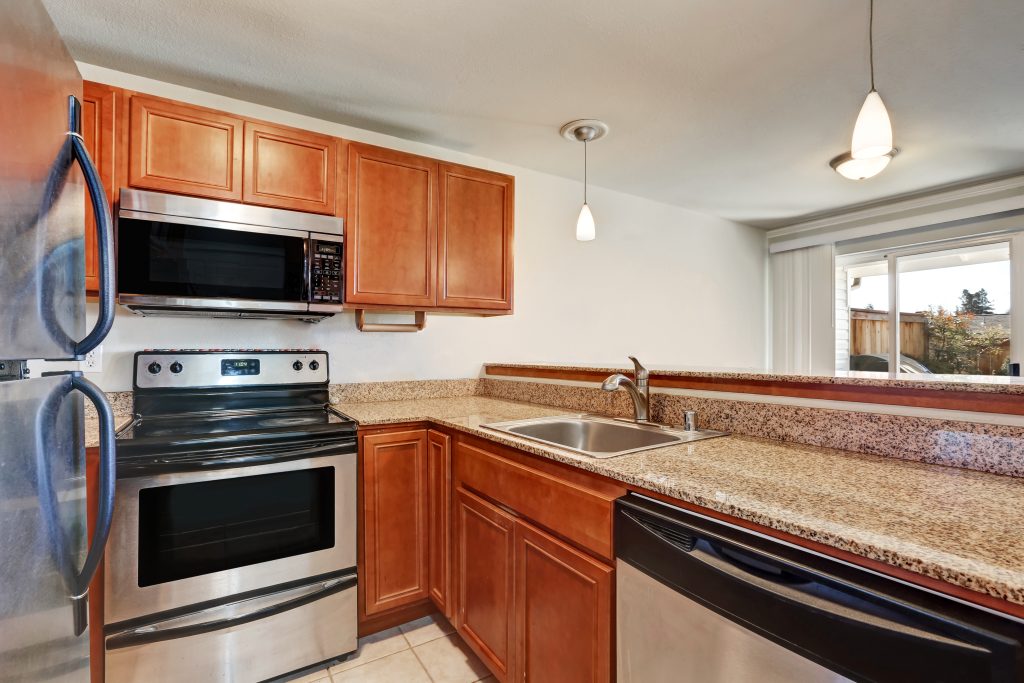
Framed cabinets are cabinets with a front face frame attached to the cabinet box. The doors and drawers are mounted to that frame, which gives the cabinet a more traditional structure.
The face frame creates a visible border around openings. This can make the cabinet feel sturdy and classic, especially with Shaker, raised panel, or more traditional door styles. Framed cabinets are common in many American kitchens because they work well with familiar layouts and transitional designs.
| Feature | Framed Cabinets |
|---|---|
| Front structure | Face frame on cabinet box |
| Style feel | Traditional, classic, transitional |
| Door alignment | Mounted to frame |
| Interior access | Slightly reduced by frame |
| Best for | Shaker, raised panel, classic kitchens |
For custom cabinet doors in Kettering, OH, framed cabinets can be a strong choice when the homeowner wants a kitchen that feels timeless, structured, and familiar.
What are frameless cabinets?
Frameless cabinets are cabinets without a front face frame. The doors attach directly to the cabinet box, creating a cleaner and more seamless appearance.
This style is often called European-style cabinetry. It gives wider access to the inside of the cabinet because there is no face frame taking up space at the opening. Frameless cabinets also work well with flat panel doors, slab doors, slim Shaker styles, and modern kitchens.
| Feature | Frameless Cabinets |
|---|---|
| Front structure | No face frame |
| Style feel | Modern, clean, minimal |
| Door alignment | Mounted to cabinet box |
| Interior access | Wider opening |
| Best for | Flat panel, modern, streamlined kitchens |
Frameless cabinets need precise installation. Since the lines are cleaner and gaps are more visible, cabinet leveling and alignment matter a lot.
Which cabinet style gives more storage?
Frameless cabinets usually give slightly more usable storage because the opening is wider without a face frame. This can make it easier to reach plates, pots, pantry items, and small appliances.
The storage difference may not feel huge in every cabinet, but it can matter in smaller kitchens. A few extra inches of access can make drawers, rollouts, and shelves easier to use. That is especially helpful in tight spaces where every cabinet needs to work harder.
Framed cabinets can still be very practical. With good planning, deep drawers, pullouts, and full-extension slides, framed cabinets can provide excellent storage. The layout often matters more than the construction style alone.
Which option is stronger?
Both framed and frameless cabinets can be strong when they are built with quality materials and installed correctly. The strength depends on the cabinet box, hardware, joinery, installation, and countertop support.
Framed cabinets get some added front structure from the face frame. Frameless cabinets rely more heavily on the strength and precision of the cabinet box itself. That is why plywood construction and careful installation matter.
| Construction Factor | Why It Matters |
|---|---|
| Plywood cabinet boxes | Provide strong support for storage and countertops |
| Birch components | Help create smooth doors and drawer fronts |
| Quality hinges | Keep doors aligned over time |
| Full-extension slides | Improve drawer access and function |
| Professional installation | Keeps cabinets level, square, and stable |
Cincinnati Cabinets often recommends looking beyond the word “framed” or “frameless.” A well-built cabinet in either style will outperform a poorly built cabinet with a better-looking door.

Which style is easier to clean?
Frameless cabinets are often easier to wipe on the outside because they usually have cleaner lines and fewer visible front-frame edges. Flat panel frameless doors can be especially simple to clean.
Framed cabinets are also easy to maintain when the door style is simple. Shaker doors, slim Shaker doors, and flat panel doors usually clean better than raised-panel doors with deeper grooves. The finish matters too. Satin and low-sheen finishes often hide fingerprints better than high-gloss finishes.
| Door Style | Cleaning Ease | Best Use |
|---|---|---|
| Flat panel | Very easy | Modern kitchens |
| Slim Shaker | Easy | Transitional kitchens |
| Simple Shaker | Moderate | Classic kitchens |
| Raised panel | More detailed | Traditional kitchens |
| Glass doors | Moderate | Accent areas only |
For custom cabinet doors in Kettering, OH, easy cleaning usually comes from a simple door profile, durable finish, and smart hardware placement.
Which one looks more modern?
Frameless cabinets usually look more modern because they create a smooth, full-overlay appearance with tighter lines. They work well in kitchens with slab doors, simple hardware, hidden pulls, quartz countertops, and minimal backsplashes.
Framed cabinets can still look current when paired with updated door styles and cleaner finishes. A slim Shaker framed cabinet in warm white, soft gray, taupe, or light wood can feel fresh without looking cold. The design details decide the final style.
A modern kitchen does not always need frameless cabinets. It needs the right combination of cabinet doors, countertop material, backsplash, flooring, lighting, and hardware.
Which one is better for traditional kitchens?
Framed cabinets are usually better for traditional and transitional kitchens because the face frame gives them a familiar built-in look. They pair well with Shaker, raised panel, inset, and more detailed door styles.
This type of cabinet can look especially good with granite, marble, warm wood floors, classic backsplashes, and traditional hardware. The visible structure can add depth to the room without making the design feel too flat.
Frameless cabinets can still work in warm or transitional homes, but they usually create a cleaner and less detailed appearance. If the homeowner wants a softer traditional look, framed cabinets are often the easier fit.
How do countertops affect the framed vs frameless decision?
Countertops matter because both framed and frameless cabinets must provide a level, stable base for stone surfaces. Granite, quartz, and marble need proper support before fabrication and installation.
Quartz is low-maintenance and stain-resistant. Granite offers strong heat resistance and natural movement when sealed as needed. Marble looks classic but needs more care because it can stain and etch. The cabinet construction underneath must support the countertop correctly.
| Countertop Material | Heat Resistance | Stain Resistance | Cabinet Planning Note |
|---|---|---|---|
| Granite | High | Good when sealed | Needs level cabinet support |
| Quartz | Moderate | Very good | Needs stable base and heat protection |
| Marble | Good but sensitive | Moderate | Needs careful support and cleaning habits |
| Quartzite | High | Good when sealed | Needs support and sealing plan |
Countertop fabrication should happen after base cabinets are installed and level. Sink cutouts, cooktop openings, seams, overhangs, and backsplashes all depend on accurate cabinet installation.
What backsplash works best with framed or frameless cabinets?
Framed cabinets often pair well with classic tile backsplashes, soft subway tile, handmade-look tile, marble-look tile, and simple stone backsplashes. Frameless cabinets often pair well with slab backsplashes, large-format tile, smooth quartz backsplashes, and cleaner grout lines.
The backsplash should support the cabinet style. A busy backsplash can make detailed framed cabinets feel crowded. A very plain backsplash can make frameless cabinets feel too flat if there is no texture elsewhere.
Backsplashes also protect walls near sinks and ranges. That matters for daily cleanup, especially in kitchens where cooking happens often.
How much do framed and frameless cabinets cost?
Basic cabinetry can start around $300 per linear foot, but final pricing depends on layout, materials, door style, finish, hardware, storage features, installation, countertop coordination, and backsplash work. Frameless cabinets may cost more in some projects because they require precise construction and installation.
| Project Item | Typical Starting Range | What Affects Cost |
|---|---|---|
| Basic cabinetry | From about $300 per linear foot | Standard layout and simple doors |
| Upgraded cabinetry | $450–$750+ per linear foot | Plywood, birch, better hardware |
| Storage-focused cabinetry | $700–$1,200+ per linear foot | Drawers, pullouts, pantry systems |
| Cabinet installation | $2,000–$6,000+ | Removal, leveling, trim, kitchen size |
| Countertop fabrication/install | $45–$100+ per sq. ft. | Granite, quartz, marble, sink cutouts |
Cincinnati Cabinets reviews these details before a project moves forward. For custom cabinet doors in Kettering, OH, a useful estimate should explain cabinet construction, door style, finish, installation, countertop fabrication, and backsplash coordination.
How long does a cabinet project take?
A cabinet project usually takes about 3-5 weeks after approval, depending on measurements, material availability, finish selection, delivery, installation, countertop coordination, and backsplash work. More detailed door styles, storage upgrades, or finish choices can affect timing.
Cabinets are usually installed before countertops. Once the base cabinets are level and secure, granite, quartz, or marble can be templated, fabricated, and installed. Backsplash work usually comes after the countertop is in place.
At Cincinnati Cabinets, we plan the order carefully because framed and frameless cabinets have different installation needs. For custom cabinet doors in Kettering, OH, the schedule should include design approval, cabinet installation, countertop fabrication, backsplash planning, and final adjustments.
Which cabinet type is better for resale?
Both framed and frameless cabinets can be good for resale when the style is neutral, the construction is strong, and the layout is practical. Framed cabinets may appeal to buyers who like classic kitchens, while frameless cabinets may appeal to buyers who prefer a modern look.
Resale depends less on the cabinet type and more on the overall kitchen. Buyers notice clean doors, smooth drawers, good storage, durable countertops, and a layout that makes sense. A poorly planned frameless kitchen will not sell better just because it is modern.
For investment-minded homeowners, simple Shaker framed cabinets or clean frameless flat panel cabinets are often safer than highly specific styles.
What should homeowners compare before choosing?
Homeowners should compare storage access, door style, cleaning needs, construction quality, countertop plans, and budget before choosing framed or frameless cabinets. The best option should fit how the kitchen is used every day.
Before ordering, review:
- Preferred kitchen style
- Door overlay and gap appearance
- Interior storage access
- Plywood box construction
- Birch door or drawer front options
- Hardware quality
- Countertop material
- Backsplash style
- Installation precision
- Long-term maintenance
The right cabinet system should feel natural when cooking, cleaning, storing dishes, and moving through the kitchen.

FAQ: Framed vs frameless cabinets
What is the main difference between framed and frameless cabinets?
Framed cabinets have a face frame on the front of the cabinet box. Frameless cabinets do not, which creates wider access and a cleaner look.
Are frameless cabinets more modern?
Yes. Frameless cabinets usually look more modern because they have cleaner lines and a full-overlay appearance.
Are framed cabinets stronger?
Framed cabinets have added front structure, but both framed and frameless cabinets can be strong when built with quality plywood, good hardware, and proper installation.
Which cabinet type gives more storage?
Frameless cabinets usually provide slightly more interior access because there is no face frame at the opening.
Are Shaker doors framed or frameless?
Shaker doors can be used on both framed and frameless cabinets. The cabinet box construction is separate from the door style.
How much does cabinetry start at?
Basic cabinetry can start around $300 per linear foot. Final pricing depends on layout, materials, finish, hardware, storage features, and installation.
How long does cabinet installation take?
Many cabinet projects take about 3-5 weeks after approval, depending on materials, delivery, installation, countertop fabrication, and backsplash work.
Where can homeowners near Kettering, OH get help choosing framed or frameless cabinets?
Cincinnati Cabinets is located near Cincinnati, OH and serves nearby communities, including Kettering, OH. We help homeowners plan custom cabinet doors in Kettering, OH, choose plywood and birch cabinet construction, compare framed and frameless options, coordinate installation, handle countertop fabrication, and match cabinets with granite, quartz, marble, and backsplashes. Our team can help choose the cabinet style that fits the kitchen’s storage, appearance, and daily use.