

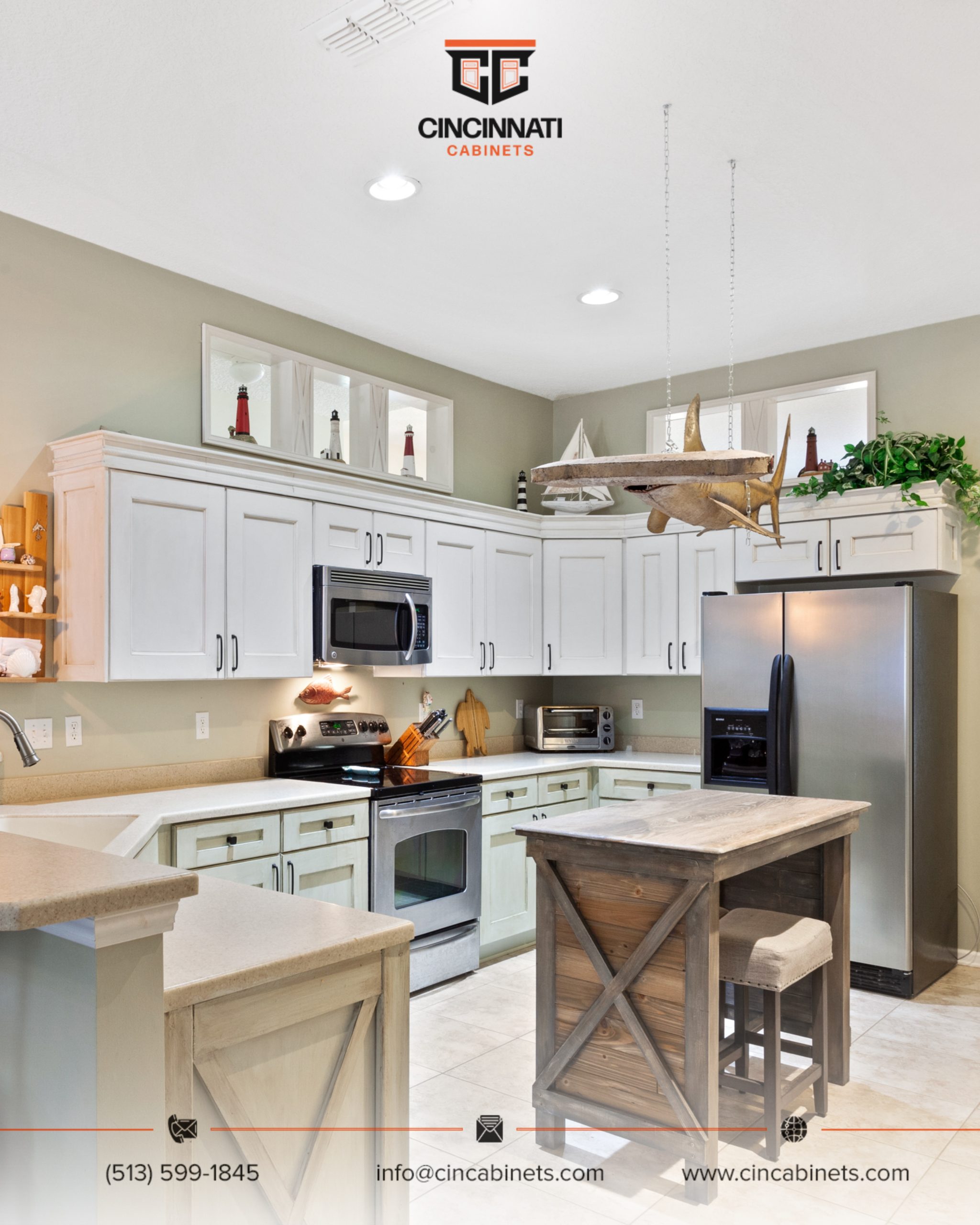
The best cabinet storage for coffee makers, mixers, and air fryers depends on weight, heat, cord access, daily use, and how much counter space the homeowner wants to keep clear. Coffee makers usually work best in a dedicated beverage zone, mixers need strong pullout or lift-up storage, and air fryers need space with ventilation and easy access.
At Cincinnati Cabinets, we plan appliance storage around real routines. A coffee maker used every morning should not be buried in a pantry. A heavy stand mixer should not live on a high shelf. For homeowners choosing cabinets in Springfield, OH, the goal is simple: store appliances where they are easy to use, easy to clean around, and easy to put away.
Why does small appliance storage matter so much?
Small appliance storage matters because these items are used often but take up a lot of counter space. Coffee makers, mixers, air fryers, blenders, toasters, and pressure cookers can quickly make a new kitchen feel cluttered.
The wrong storage creates daily friction. People stop putting appliances away because the cabinet is too low, too high, too deep, or too far from an outlet. Good storage makes the kitchen feel calmer without making daily tasks slower.
| Appliance | Main Storage Challenge | Best Storage Direction |
|---|---|---|
| Coffee maker | Needs outlet and water access | Beverage cabinet or counter zone |
| Stand mixer | Heavy and awkward to lift | Mixer lift or deep lower drawer |
| Air fryer | Needs ventilation and clearance | Deep cabinet, appliance garage, or counter zone |
| Blender | Tall shape and cord storage | Tall cabinet or pullout shelf |
| Toaster | Crumbs and daily use | Easy-access cabinet near prep area |
Storage should match how often the appliance is used, not how nice the cabinet looks empty.
Where should a coffee maker be stored?
A coffee maker should be stored where mugs, filters, coffee, sugar, spoons, and water are close by. A dedicated coffee station usually saves more time than hiding the machine in a random cabinet.
For daily coffee drinkers, the coffee maker often belongs on the counter inside a planned beverage zone. That zone may include an upper cabinet for mugs, a drawer for pods or filters, and a lower cabinet for extra supplies. A pullout shelf can work if the appliance is not too tall and has enough cord clearance.
When we design cabinets in Springfield, OH, we usually ask how coffee is made every morning. Drip coffee, espresso, single-serve machines, and built-in coffee systems all need different storage.
Is an appliance garage worth it?
An appliance garage is worth it when the homeowner wants small appliances hidden but still easy to reach. It works best for coffee makers, toasters, blenders, and smaller air fryers that are used often.
The key is depth and height. Many appliance garages look good in design drawings but fail in real life because the machine does not fit, the door gets in the way, or the cord has no clean path. A good appliance garage should allow the appliance to slide forward, plug in safely, and cool properly.
| Appliance Garage Style | Best For | Watch Out For |
|---|---|---|
| Roll-up door | Coffee maker, toaster | Can feel dated if not designed well |
| Pocket doors | Modern kitchens | Needs more cabinet width |
| Lift-up door | Clean upper storage | Needs enough clearance |
| Tall pantry garage | Multiple appliances | Requires strong organization |
| Countertop cabinet garage | Daily-use machines | Must manage heat and cords |
An appliance garage should make cleanup easier, not create another cramped cabinet.
What storage works best for a stand mixer?
A stand mixer works best on a mixer lift, deep drawer, or strong lower cabinet shelf because it is heavy and awkward to move. Most people stop using a mixer when it is stored too high.
A mixer lift can raise the mixer to working height and lower it back into the cabinet. It saves lifting, but it uses cabinet space and must be installed correctly. A deep drawer can also work if the drawer slides are strong enough and the mixer fits with clearance.
For serious baking, we often plan mixer storage near a marble, quartz, or granite countertop area used for rolling dough, measuring ingredients, and cooling pans. The storage should support the task happening above it.
Is a mixer lift better than a deep drawer?
A mixer lift is better for homeowners who use a heavy mixer often and do not want to lift it onto the counter. A deep drawer is better when the mixer is used occasionally and the homeowner wants simpler storage.
Both can work. The decision depends on frequency, weight, cabinet width, and budget. A mixer lift feels convenient, but it takes up most of a base cabinet. A deep drawer can be more flexible because it may hold mixer bowls, attachments, or baking tools with the appliance.
| Storage Option | Best For | Main Benefit | Main Limitation |
|---|---|---|---|
| Mixer lift | Frequent bakers | Less lifting | Uses cabinet space |
| Deep drawer | Occasional use | Easy access | Still requires lifting |
| Lower shelf pullout | Medium use | Brings mixer forward | Needs strong slides |
| Countertop storage | Daily use | Fastest access | Uses counter space |
| Pantry shelf | Rare use | Keeps kitchen clear | Less convenient |
The right answer depends on the person using the kitchen.
Where should an air fryer go in a cabinet design?
An air fryer should go in a cabinet or counter zone with enough clearance, easy lifting access, and safe ventilation. It should not be squeezed into a tight closed cabinet while hot.
Air fryers are bulky, and many models are deeper than homeowners expect. They also create heat and need space around them during use. A deep lower cabinet, pullout shelf, or dedicated counter area can work, but the appliance should be measured before the cabinet layout is finalized.
For cabinets in Springfield, OH, air fryer storage is now one of the most common practical requests we hear. Homeowners want the convenience without losing a large section of countertop every day.
What cabinet materials are best for appliance storage?
Plywood cabinet boxes and birch doors or drawer fronts are practical choices for appliance-heavy kitchens because they support daily use, weight, and smooth finishes. Strong construction matters more when cabinets include pullouts, deep drawers, mixer lifts, and appliance garages.
Small appliances add stress to storage. A mixer is heavy. An air fryer is bulky. Coffee stations are opened and used daily. Plywood boxes, quality hinges, full-extension slides, and properly installed hardware help the storage last.
Cincinnati Cabinets usually recommends planning the cabinet structure before adding specialty accessories. A smart accessory is only useful when the cabinet around it is built and installed well.
How do countertops affect appliance storage?
Countertops affect appliance storage because small appliances need landing space, heat resistance, stain resistance, and easy cleanup nearby. Granite, quartz, marble, and quartzite each change how the zone functions.
Coffee stations need a surface that handles dark spills and water drips. Baking zones may benefit from marble or quartz, depending on care expectations. Air fryer zones need heat awareness and enough room to set trays, baskets, and plates nearby.
| Countertop Material | Heat Resistance | Stain Resistance | Maintenance Level | Best Appliance Zone |
|---|---|---|---|---|
| Granite | High | Good when sealed | Moderate | Air fryer, toaster, cooking zones |
| Quartz | Moderate | Very good | Low | Coffee stations and prep areas |
| Marble | Good but sensitive | Moderate | Higher | Baking areas with careful use |
| Quartzite | High | Good when sealed | Moderate | Statement prep or beverage zones |
Countertop fabrication should be coordinated with cabinet layout. Sink cutouts, appliance clearances, overhangs, edges, and backsplashes all affect how the finished kitchen works.
Should appliance storage include a backsplash?
Appliance storage should include backsplash planning when the appliance sits on or near the countertop. Coffee makers, espresso machines, air fryers, and blenders can splash, steam, drip, or leave residue on the wall.
A tile backsplash can protect the area and make cleaning faster. Quartz, granite, marble, ceramic, porcelain, and slab-style backsplashes can all work depending on the design. Behind a coffee station, a wipeable backsplash is especially useful because coffee splashes and water marks happen every day.
Backsplash height, outlet placement, under-cabinet lighting, and cabinet depth should all be reviewed before installation.
How much does appliance-focused cabinet storage cost?
Basic cabinetry can start around $300 per linear foot, but final pricing depends on layout, material, door style, finish, hardware, pullouts, mixer lifts, appliance garages, installation, countertop fabrication, and backsplash work. Specialty storage usually raises the cost because it requires more hardware, planning, and precise installation.
| Project Item | Typical Starting Range | What Affects Cost |
|---|---|---|
| Basic cabinetry | From about $300 per linear foot | Standard boxes and simple doors |
| Upgraded cabinetry | $450–$750+ per linear foot | Plywood, birch, better hardware |
| Appliance storage cabinetry | $700–$1,200+ per linear foot | Pullouts, lifts, garages, deep drawers |
| Cabinet installation | $2,000–$6,000+ | Layout, removal, leveling, trim |
| Countertop fabrication/install | $45–$100+ per sq. ft. | Granite, quartz, marble, sink cutouts |
Cincinnati Cabinets reviews appliance sizes before pricing because one oversized machine can change the whole cabinet plan. For cabinets in Springfield, OH, a useful estimate should explain storage accessories, cabinet construction, installation, countertop fabrication, backsplash planning, and project timing.
How long does a cabinet project with appliance storage take?
A cabinet project usually takes about 3-5 weeks after approval, depending on measurements, material availability, finish selection, appliance storage details, delivery, installation, countertop coordination, and backsplash work. Specialty storage should be finalized before cabinets are ordered.
The process usually starts with layout planning and measurements. Then we confirm appliance sizes, cabinet materials, drawer locations, lift hardware, outlet needs, countertop direction, and backsplash details. After cabinet installation, countertops are templated and fabricated, then backsplash work follows.
At Cincinnati Cabinets, we ask homeowners to measure coffee makers, mixers, air fryers, and other appliances early. For cabinets in Springfield, OH, the 3-5 week schedule works best when appliance storage decisions are made before production.
What mistakes should homeowners avoid?
The biggest mistake is designing appliance storage without measuring the appliances. Air fryers, espresso machines, and stand mixers are often larger than people remember.
Another mistake is hiding daily-use appliances too well. If the coffee maker is behind too many doors or the mixer is too hard to lift, the appliance will end up on the counter anyway. Convenience matters.
Before choosing appliance storage, review:
- Appliance height
- Appliance depth
- Appliance weight
- Cord location
- Outlet placement
- Heat clearance
- Door swing
- Drawer slide strength
- Countertop landing space
- Backsplash protection
- Cleaning habits
- Daily use frequency
Good appliance storage should make the kitchen faster, not just prettier.

FAQ: Cabinet storage for coffee makers, mixers, and air fryers
What is the best storage for a coffee maker?
A dedicated coffee station with nearby mugs, supplies, outlets, and a wipeable backsplash usually works best.
Is a mixer lift worth it?
A mixer lift is worth it for frequent bakers who do not want to lift a heavy stand mixer onto the counter.
Can an air fryer go inside a cabinet?
It can be stored in a cabinet, but it should be used with proper ventilation and clearance. It should not run inside a tight closed cabinet.
Are appliance garages still practical?
Yes. Appliance garages are practical when they are sized correctly and include outlet, door, depth, and ventilation planning.
What cabinet materials are best for appliance storage?
Plywood cabinet boxes, birch doors or drawer fronts, strong hinges, and full-extension slides are practical for appliance-heavy kitchens.
How much does cabinetry start at?
Basic cabinetry can start around $300 per linear foot. Final pricing depends on layout, materials, accessories, hardware, installation, countertops, and backsplashes.
How long does a cabinet project take?
Many cabinet projects take about 3-5 weeks after approval, depending on materials, appliance storage details, delivery, installation, countertop fabrication, and backsplash work.
What should I ask before ordering cabinets in Springfield, OH?
Ask about appliance measurements, mixer lifts, appliance garages, pullout shelves, plywood construction, birch components, outlets, ventilation, countertop fabrication, backsplash planning, installation, and timing.
Where can homeowners near Springfield, OH get help planning appliance storage?
Cincinnati Cabinets is located near Cincinnati, OH and serves nearby communities, including Springfield, OH. We help homeowners plan cabinets in Springfield, OH for coffee makers, mixers, air fryers, and daily-use appliances, choose plywood and birch cabinet construction, coordinate installation, handle countertop fabrication, and match cabinets with granite, quartz, marble, and backsplashes. Our team can help make appliance storage feel natural instead of forced.