

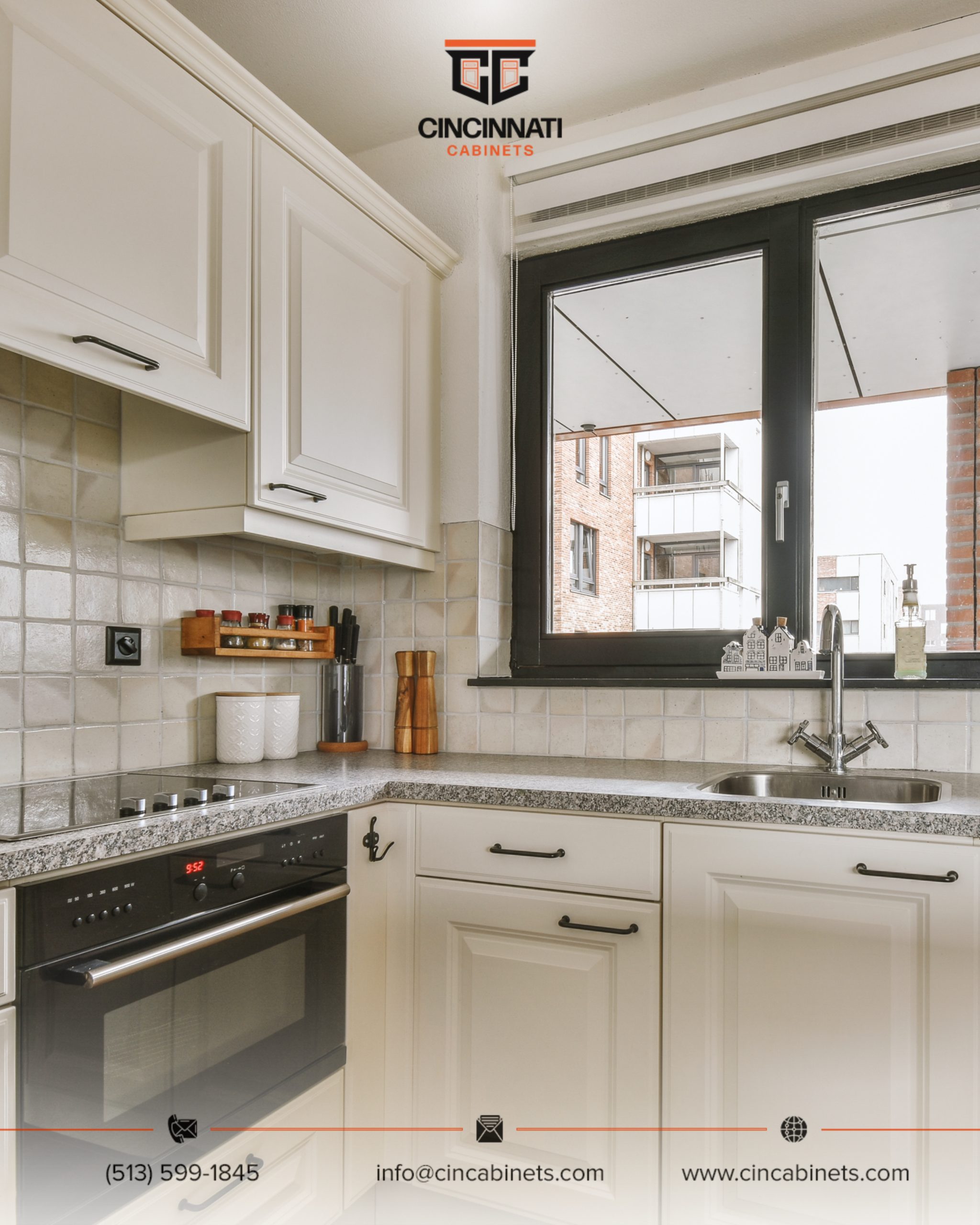
A satin or low-sheen cabinet finish is usually the easiest to clean after cooking because it wipes better than flat matte paint and shows fewer streaks than high gloss. It gives homeowners a practical middle ground: smooth enough for grease and food splashes, but not so shiny that every fingerprint and wipe mark becomes obvious.
At Cincinnati Cabinets, we usually talk about cabinet finishes in real kitchen terms. Cooking does not only leave mess on the countertop. Steam, oil, sauce splashes, flour dust, and fingerprints collect around cabinet pulls, range areas, trash pullouts, and sink bases. For homeowners comparing cabinet fabricators in Beavercreek, OH, the best finish is the one that still looks clean after dinner, not only on installation day.

What cabinet finish is easiest to wipe after cooking?
A satin finish is usually easiest to wipe after cooking because it has a smooth surface without the strong reflection of gloss. It handles regular cleaning better than flat matte finishes and tends to hide minor wipe marks better than high-gloss finishes.
A high-gloss finish may seem easy because it feels slick, but it can show streaks, fingerprints, grease marks, and water spots quickly. Matte finishes can look soft and modern, but oils from hands and cooking residue may leave visible marks in high-touch areas.
| Cabinet Finish | Cleaning Ease | Fingerprint Visibility | Best For |
|---|---|---|---|
| High gloss | Easy to wipe, streak-prone | High | Sleek kitchens with careful cleaning |
| Matte | Moderate | Moderate to high with oils | Low-glare designs |
| Satin | High | Low to moderate | Busy kitchens |
| Semi-gloss | High, more reflective | Moderate to high | Traditional kitchens |
| Textured wood | Moderate | Lower because grain helps | Natural warm kitchens |
When homeowners compare cabinet fabricators in Beavercreek, OH, we recommend touching and wiping a finish sample before choosing it. A cabinet door can look perfect in a showroom and still be annoying after one week of real cooking.
Why does cooking make cabinets harder to keep clean?
Cooking makes cabinets harder to keep clean because grease and steam travel farther than most people expect. Even if the range hood is used, nearby cabinet doors can collect a light film over time.
The cabinets closest to the range, microwave, sink, dishwasher, and trash area usually need the most cleaning. Drawer fronts near prep zones also show hand marks because people open them while cooking.
A finish that wipes easily matters most in these areas. The kitchen does not need to look spotless every minute, but it should not require scrubbing after every meal.
Are matte cabinet finishes hard to clean?
Matte cabinet finishes are not always hard to clean, but they can show oils, fingerprints, and uneven wiping more than homeowners expect. The softer look is attractive, yet it may not be the easiest choice for heavy cooking zones.
Very flat finishes can absorb light and make marks appear as shiny patches. This is most noticeable on dark colors, especially black, navy, charcoal, and deep green. A soft matte finish can work, but it should be tested with real touch and cleaning.
If a homeowner cooks often, a satin finish is usually safer than a very flat matte finish. It still feels current without making daily cleaning frustrating.
Are glossy cabinets practical after cooking?
Glossy cabinets can be practical in some kitchens, but they are not always forgiving. They wipe easily, but they also reflect light, which makes streaks, fingerprints, dust, and grease more visible.
Gloss can work well on small accent areas, modern flat-panel cabinets, or kitchens where the homeowner cleans frequently. It can feel less practical in a busy family kitchen where drawers and doors are touched all day.
| Finish Type | Cooking Grease Visibility | Wipe Mark Visibility | Practical Rating |
|---|---|---|---|
| High gloss | Moderate to high | High | Good for careful cleaners |
| Semi-gloss | Moderate | Moderate | Practical but reflective |
| Satin | Low to moderate | Low | Very practical |
| Matte | Moderate | Moderate | Depends on color |
| Wood grain finish | Low to moderate | Low | Practical with proper care |
Gloss is not wrong. It simply demands more attention.
What cabinet colors make cleaning feel easier?
Warm greige, taupe, mushroom beige, light wood, warm gray, and soft cream usually make cleaning feel easier because they hide small marks better than pure white or very dark colors. Color and finish work together.
Pure white cabinets can show sauce splashes, scuffs, and fingerprints quickly. Dark cabinets can show dust, water streaks, and oily hand marks. Mid-tone neutrals are often more forgiving for everyday cooking.
For cabinet fabricators in Beavercreek, OH, color should never be chosen separately from finish. A satin taupe door can be easier to live with than a matte black door or a glossy white door, even if all three look beautiful in photos.

Why do plywood and birch matter for cleanable cabinets?
Plywood and birch matter because a cleanable cabinet finish needs a stable, smooth, well-built base. Weak cabinet boxes, uneven doors, and rough panels make the kitchen harder to maintain over time.
Plywood cabinet boxes are practical because they provide strong support for drawers, shelves, hardware, and stone countertops. Birch components are often useful for doors and drawer fronts because they provide a smooth surface for painted or stained finishes.
| Material or Feature | Why It Helps Daily Cleaning |
|---|---|
| Plywood boxes | Keeps cabinets stable and aligned |
| Birch components | Supports smoother painted or stained finishes |
| Soft-close hinges | Reduces slamming and finish stress |
| Full-extension slides | Makes drawers easier to access |
| Simple door profiles | Fewer grooves to collect grease |
Cincinnati Cabinets focuses on construction before finish details because a beautiful finish still needs good material underneath. Smooth surfaces and clean gaps make routine wiping easier.
Which cabinet door style is easiest to clean?
Flat panel, slim Shaker, and simple Shaker doors are usually easiest to clean because they do not have heavy grooves, raised trim, or complicated profiles. The simpler the door, the fewer places grease and dust can collect.
Raised-panel doors can look formal, but they take more time to wipe after cooking. Detailed trim around the range area can collect residue quickly, especially in kitchens where frying, baking, or sautéing happens often.
| Door Style | Cleaning Difficulty | Best Finish Pairing |
|---|---|---|
| Flat panel | Low | Satin or soft matte |
| Slim Shaker | Low to moderate | Satin |
| Simple Shaker | Moderate | Satin or semi-gloss |
| Raised panel | Higher | Semi-gloss or satin |
| Glass doors | Moderate | Easy glass, but visible contents |
A cleanable kitchen does not have to look plain. It needs cabinet details that match the household’s cooking routine.
How do countertops and backsplashes affect cabinet cleaning?
Countertops and backsplashes affect cabinet cleaning because they control where splashes land and how easy the whole kitchen is to wipe down. Granite, quartz, marble, and backsplashes should be planned with the cabinet finish, not after it.
Quartz is low-maintenance and works well in busy kitchens. Granite is durable and heat-resistant. Marble looks beautiful but needs more careful cleaning because it can stain and etch. Backsplashes help protect the wall and reduce mess behind the range and sink.
| Surface Material | Heat Resistance | Stain Resistance | Cleaning Note |
|---|---|---|---|
| Granite | High | Good when sealed | Practical near cooking zones |
| Quartz | Moderate | Very good | Easy daily cleaning |
| Marble | Good but sensitive | Moderate | Needs gentle cleaners |
| Quartzite | High | Good when sealed | Strong natural stone option |
Countertop fabrication usually happens after the base cabinets are installed and level. Cabinet finish, countertop color, backsplash height, sink placement, and appliance openings should all be reviewed before installation.
How much do easy-clean cabinets cost?
Basic cabinetry can start around $300 per linear foot, but the final price depends on material, layout, door style, finish, hardware, storage features, installation, countertop coordination, and backsplash work. A more practical finish can be worth the added planning if the kitchen is used heavily every day.
| Project Item | Typical Starting Range | What Affects Cost |
|---|---|---|
| Basic cabinetry | From about $300 per linear foot | Standard boxes and simple finish |
| Upgraded cabinetry | $450–$750+ per linear foot | Plywood, birch, better hardware |
| Storage-focused cabinetry | $700–$1,200+ per linear foot | Drawers, pullouts, pantry systems |
| Cabinet installation | $2,000–$6,000+ | Removal, leveling, trim, kitchen size |
| Countertop fabrication/install | $45–$100+ per sq. ft. | Granite, quartz, marble, cutouts |
For cabinet fabricators in Beavercreek, OH, the estimate should explain more than the cabinet color. Finish durability, door profile, hardware, construction, installation, countertop support, fabrication timing, and backsplash coordination all affect how easy the kitchen is to maintain.
How long does a cabinet project take?
A cabinet project usually takes about 3 to 5 weeks after approval, depending on measurements, material availability, finish selection, delivery, installation, and countertop coordination. Specialty finishes, storage upgrades, or detailed layouts can affect timing.
Cabinets are installed before countertops. Once base cabinets are level and secure, granite, quartz, or marble countertops can be templated, fabricated, and installed. Backsplash work usually follows after the countertop is in place.
At Cincinnati Cabinets, we plan this sequence carefully because finish choice affects daily use. For cabinet fabricators in Beavercreek, OH, the timeline should include cabinet approval, installation, countertop fabrication, backsplash work, and final adjustments.
What cleaning habits protect cabinet finishes?
Gentle, regular cleaning protects cabinet finishes better than harsh scrubbing. A soft cloth, mild soap, and quick wipe-downs after heavy cooking usually work better than aggressive cleaners.
The best habits are simple:
- Wipe grease near the range before it hardens.
- Use a soft damp cloth, not abrasive pads.
- Dry cabinet fronts after cleaning.
- Avoid harsh chemicals and heavy degreasers unless approved.
- Use the range hood while cooking.
- Clean around handles and pulls often.
- Keep backsplash and countertop seams dry.
A good finish makes cleaning easier, but no finish stays perfect without basic care.

FAQ: Easy-clean cabinet finishes
What cabinet finish is easiest to clean?
Satin is usually the easiest finish to clean because it wipes well and shows fewer streaks than gloss.
Are matte cabinets hard to clean?
Matte cabinets can show oils and fingerprints, especially in dark colors or high-touch areas.
Are glossy cabinets good for kitchens?
Glossy cabinets can be easy to wipe, but they often show fingerprints, streaks, and grease marks quickly.
What cabinet color hides cooking mess best?
Warm greige, taupe, mushroom beige, light wood, warm gray, and soft cream usually hide daily cooking marks better than pure white or black.
What cabinet door style is easiest to wipe?
Flat panel, slim Shaker, and simple Shaker doors are usually easiest because they have fewer grooves and details.
How much does cabinetry start at?
Basic cabinetry can start around $300 per linear foot. Final pricing depends on materials, layout, finish, hardware, storage features, and installation.
How long does cabinet installation take?
Many cabinet projects take about 3 to 5 weeks after approval, depending on materials, delivery, installation, countertops, and backsplash work.
Where can homeowners near Beavercreek, OH get help choosing an easy-clean cabinet finish?
Cincinnati Cabinets is located near Cincinnati, OH and serves nearby communities, including Beavercreek, OH. We help homeowners compare cabinet fabricators in Beavercreek, OH, choose practical finishes, review plywood and birch construction, coordinate installation, and match cabinets with granite, quartz, marble, and backsplashes. Our team can help create a kitchen that cleans up more easily after real cooking.