


Bathroom cabinets become harder to use when the layout ignores daily routines, door swings, plumbing, humidity, storage needs, and countertop space. The biggest mistakes are choosing the wrong vanity size, using doors where drawers would work better, blocking movement, skipping moisture-resistant construction, and treating the countertop as an afterthought.
At Cincinnati Cabinets, we look at bathrooms differently than kitchens because the space is usually smaller, tighter, and used at faster moments of the day. People need towels, hair tools, skincare, cleaning supplies, and sink access without fighting the vanity. For homeowners planning bathroom cabinet doors in Beavercreek, OH, the best design should make the morning routine easier, not just make the bathroom look newer.

Why do bathroom cabinets become frustrating after a remodel?
Bathroom cabinets become frustrating after a remodel when the design looks good on paper but does not match how the space is used. A vanity can be beautiful and still feel awkward if the doors hit the toilet, drawers run into plumbing, or daily items have nowhere to go.
Small bathrooms leave less room for mistakes. One bad door swing or oversized vanity can affect walking space, sink access, towel storage, and cleaning. A good bathroom cabinet plan starts with movement first, then storage, then style.
| Cabinet Mistake | What Happens After Installation | Better Choice |
|---|---|---|
| Vanity is too wide | Bathroom feels crowded | Choose size based on clearance |
| Doors block movement | Access feels awkward | Use drawers or smaller doors |
| No drawer storage | Small items pile up | Add divided drawers |
| Weak material choice | Moisture damage appears faster | Use plywood and quality fronts |
| Countertop chosen late | Sink and cabinet layout suffer | Plan vanity and top together |
A bathroom remodel should save steps, not add little daily annoyances.
Is choosing the wrong vanity size a common mistake?
Yes, choosing the wrong vanity size is one of the most common bathroom cabinet mistakes. A vanity that is too large can make the room feel tight, while one that is too small may leave storage problems unsolved.
Homeowners often focus on maximum cabinet width, but clearance matters just as much. The vanity must leave room for doors, drawers, shower entry, toilet access, and comfortable standing space at the sink. In a smaller bath, a few inches can change how the whole room feels.
Before ordering, we recommend measuring the wall, plumbing location, door swing, and walking path. The vanity should fit the room, not force the room to work around it.
Are cabinet doors always the best option for a bathroom vanity?
Cabinet doors are not always the best option because drawers often work better for small daily items. Doors are useful for plumbing access and taller items, but they can turn the lower vanity into a dark storage box.
Drawers make it easier to organize skincare, brushes, razors, hair tools, toothpaste, and makeup. A drawer with dividers is usually more useful than a wide cabinet with one shelf. For bathroom cabinet doors in Beavercreek, OH, the smartest design may include a mix of doors and drawers instead of doors everywhere.
| Storage Type | Best For | Possible Problem |
|---|---|---|
| Cabinet doors | Plumbing, cleaners, tall bottles | Items get buried |
| Shallow drawers | Skincare, grooming tools | Limited tall storage |
| Deep drawers | Towels, hair tools | Must clear plumbing |
| Open shelves | Decorative towels | Can look messy |
| Pullouts | Narrow spaces | Adds cost and hardware needs |
The goal is not to eliminate doors. The goal is to use doors where they make sense.
What happens when plumbing is ignored?
Plumbing causes problems when drawers, shelves, or sink bases are planned without checking pipe location. A vanity may look perfect in a drawing, but the top drawer may not function if the drain line is in the way.
This is especially important with double vanities, wall-to-wall vanities, and older bathrooms. Existing plumbing may limit drawer placement unless changes are made before installation. Moving plumbing can be possible, but it affects time, cost, and coordination.
A bathroom cabinet plan should include sink type, faucet placement, drain location, countertop thickness, and backsplash height before fabrication and installation begin.
Why does moisture-resistant construction matter in bathrooms?
Moisture-resistant construction matters because bathrooms deal with steam, splashes, wet hands, cleaning products, and humidity. Cabinet materials that might survive in a dry area can wear faster near a sink, shower, or tub.
Plywood cabinet boxes are practical because they provide stronger structure than weaker box materials. Birch components can create smooth doors and drawer fronts for painted or stained finishes. Soft-close hinges and quality drawer slides also help reduce daily stress on the cabinet.
| Material or Feature | Why It Matters in a Bathroom |
|---|---|
| Plywood boxes | Better stability in a high-use vanity |
| Birch components | Smooth finish for cabinet fronts |
| Soft-close hinges | Less slamming and wear |
| Full-extension slides | Easier drawer access |
| Quality installation | Better alignment around plumbing and tops |
Cincinnati Cabinets focuses on cabinet construction because a bathroom vanity needs to handle moisture, storage, and daily use at the same time.
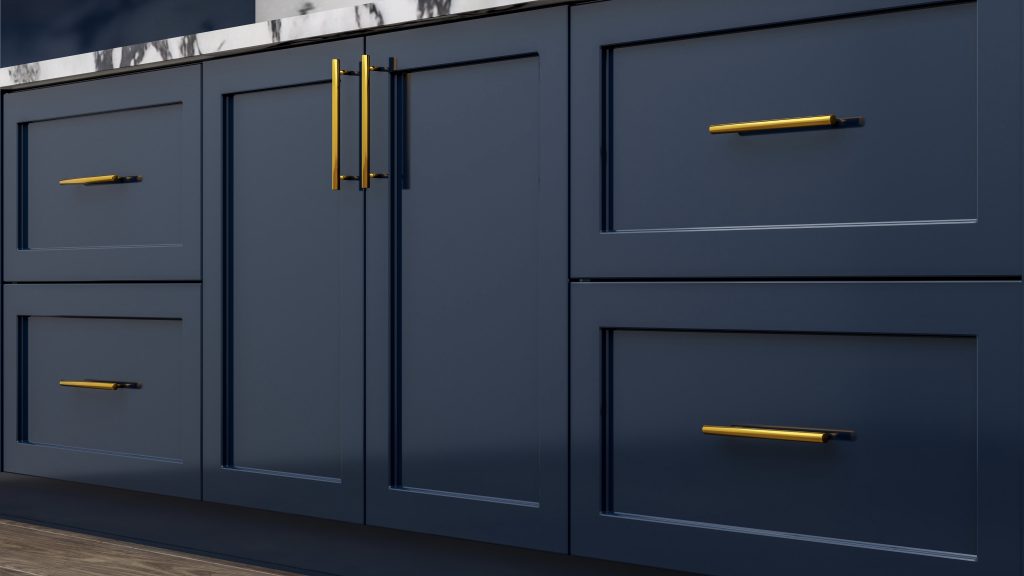
How do countertops affect bathroom cabinet function?
Countertops affect bathroom cabinet function because sink placement, edge style, backsplash, and material choice all change how the vanity works. Granite, quartz, and marble each create a different daily experience.
Quartz is often practical in bathrooms because it resists stains well and does not need sealing. Granite is durable and works well when sealed as needed. Marble looks elegant but needs more care because it can stain or etch from certain products, cleaners, and cosmetics.
| Countertop Material | Stain Resistance | Heat Resistance | Bathroom Maintenance |
|---|---|---|---|
| Granite | Good when sealed | High | Moderate |
| Quartz | Very good | Moderate | Low |
| Marble | Moderate | Good but sensitive | Higher |
| Quartzite | Good when sealed | High | Moderate |
Hair tools, toothpaste, soap, perfume, and skincare products can all affect the surface. The countertop should be chosen with real bathroom habits in mind.
What backsplash mistakes make a bathroom harder to clean?
Backsplash mistakes make a bathroom harder to clean when the wall behind the sink is left too exposed or the material is too textured. Water, toothpaste, soap, and cosmetics can mark the wall quickly.
A short backsplash, full-height backsplash, or carefully selected tile can protect the wall and make cleaning easier. The backsplash should connect visually with the vanity, countertop, mirror, and fixtures. It should not fight the countertop pattern or make a small bathroom feel crowded.
Backsplashes also matter during fabrication. Countertop size, sink position, faucet clearance, mirror height, and wall conditions can affect the final result.
How much does bathroom cabinetry cost?
Basic cabinetry can start around $300 per linear foot, but the final cost depends on vanity size, materials, finish, door style, drawer layout, hardware, countertop coordination, installation, fabrication details, and backsplash work. More drawers, pullouts, specialty finishes, and double vanities can increase the price.
| Project Item | Typical Starting Range | What Affects Cost |
|---|---|---|
| Basic cabinetry | From about $300 per linear foot | Standard vanity size and simple doors |
| Upgraded cabinetry | $450–$750+ per linear foot | Plywood, birch, better hardware |
| Storage-focused vanity | $700–$1,200+ per linear foot | Drawers, dividers, pullouts |
| Cabinet installation | $1,500–$5,000+ | Removal, plumbing access, leveling |
| Countertop fabrication/install | $45–$100+ per sq. ft. | Granite, quartz, marble, sink cutouts |
Cincinnati Cabinets reviews these details before a project moves forward. For bathroom cabinet doors in Beavercreek, OH, a useful estimate should explain cabinet materials, door and drawer layout, installation, countertop fabrication, sink cutouts, and backsplash coordination.
How long does a bathroom cabinet project take?
A bathroom cabinet project usually takes about 3-5 weeks after approval, depending on measurements, material availability, finish selection, delivery, installation, countertop coordination, and backsplash work. More detailed storage layouts or specialty finishes can affect timing.
Cabinets are usually installed before countertops. Once the vanity is level and secure, granite, quartz, or marble can be templated, fabricated, and installed. Plumbing and backsplash work usually happen after the countertop is in place.
At Cincinnati Cabinets, we plan this order carefully because bathroom cabinet mistakes often come from rushed decisions. For bathroom cabinet doors in Beavercreek, OH, the schedule should include design approval, vanity installation, countertop fabrication, backsplash planning, plumbing coordination, and final adjustments.
What storage features are actually useful in a bathroom?
The most useful bathroom storage features are shallow drawers, divided drawers, deep lower drawers, pullouts, and planned space around plumbing. These features make small items easier to find.
Bathroom storage should be designed around routine. A person getting ready quickly should not need to dig behind cleaning bottles to find a hairbrush. A shared bathroom should not force everyone’s items into one crowded cabinet.
Useful bathroom storage features include:
- Shallow drawers for skincare and grooming items
- Deep drawers for towels and hair tools
- Dividers for brushes, razors, and cosmetics
- Pullouts for narrow spaces
- Cabinet doors for plumbing and tall bottles
- Hidden storage near the sink
- Easy-to-clean areas under the vanity
Good storage reduces countertop clutter, which makes the bathroom feel calmer and easier to clean.
What design mistakes make bathroom cabinets look dated?
Bathroom cabinets look dated when the door style, finish, hardware, countertop, and backsplash do not work together. Heavy raised panels, overly glossy finishes, orange wood tones, bulky hardware, and busy stone can make a newer vanity feel older than it is.
Simple Shaker, slim Shaker, and flat panel doors usually age better. Warm white, soft gray, taupe, light wood, and natural stained finishes can work well when matched with the right countertop. Hardware should be comfortable and proportional, not just decorative.
A bathroom is a small space. Every detail is closer to the eye, so mismatched choices stand out faster.
What should homeowners check before ordering a bathroom vanity?
Homeowners should check measurements, plumbing, door swings, drawer clearance, countertop material, backsplash needs, and storage habits before ordering. The best bathroom cabinet plan is based on real use.
Before choosing bathroom cabinet doors in Beavercreek, OH, review:
- Vanity width and depth
- Door and drawer clearance
- Existing plumbing location
- Sink type and faucet placement
- Countertop material
- Backsplash height
- Moisture exposure
- Storage needs
- Hardware finish
- Lighting and mirror placement
A bathroom cabinet should make the space easier to use from the first morning after installation.
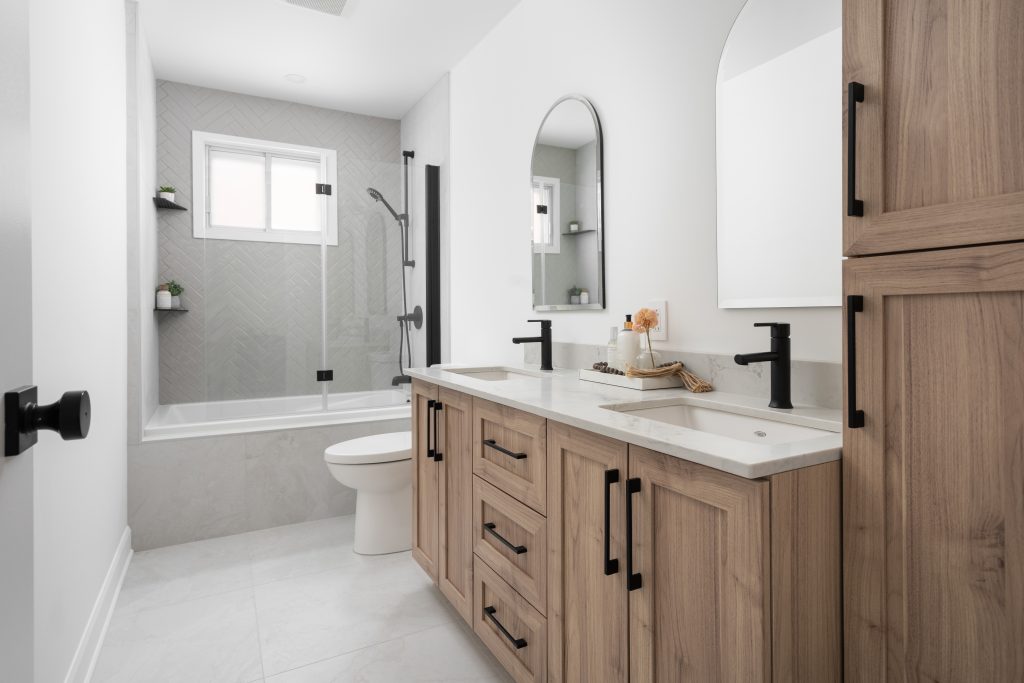
FAQ: Bathroom cabinet mistakes
What is the biggest bathroom cabinet mistake?
The biggest mistake is choosing a vanity size or layout without checking clearance, plumbing, storage needs, and countertop plans.
Are drawers better than cabinet doors in a bathroom?
Drawers are better for small daily items, while cabinet doors are useful for plumbing access, cleaners, and taller products.
What material is best for bathroom cabinets?
Plywood cabinet boxes and birch components are practical because they support strength, smooth finishes, and daily use.
What countertop works best for a bathroom vanity?
Quartz is often easiest to maintain, granite is durable when sealed, and marble is beautiful but needs more care.
How much does bathroom cabinetry start at?
Basic cabinetry can start around $300 per linear foot. Final pricing depends on vanity size, materials, finish, storage features, installation, and countertop work.
How long does a bathroom cabinet project take?
Many bathroom cabinet projects take about 3-5 weeks after approval, depending on materials, delivery, installation, countertop fabrication, and backsplash work.
What should I ask before ordering bathroom cabinet doors in Beavercreek, OH?
Ask about plywood construction, birch components, door and drawer layout, moisture resistance, installation, countertop fabrication, and backsplash coordination.
Where can homeowners near Beavercreek, OH get help with bathroom cabinets?
Cincinnati Cabinets is located near Cincinnati, OH and serves nearby communities, including Beavercreek, OH. We help homeowners plan bathroom cabinet doors in Beavercreek, OH, choose plywood and birch cabinet construction, coordinate installation, handle countertop fabrication, and match vanities with granite, quartz, marble, and backsplashes. Our team can help avoid bathroom cabinet mistakes that make a small space harder to use.