

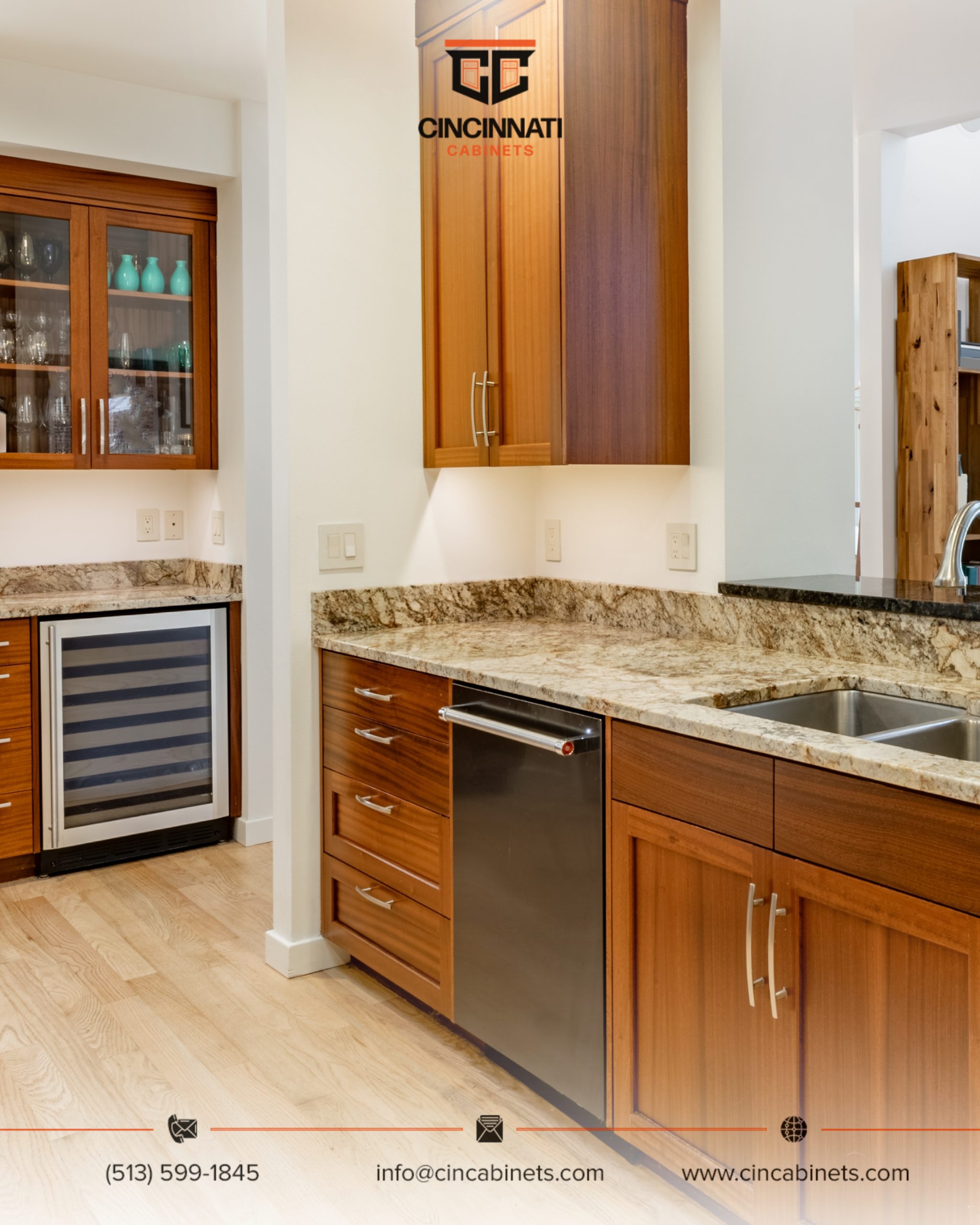
The best way to plan cabinet storage for pots, pans, and small appliances is to store each item close to where it is used. Pots and pans should sit near the range, small appliances should have easy-access storage near prep zones, and heavy items should go in deep drawers or pullouts instead of high shelves.
At Cincinnati Cabinets, we usually start this conversation by asking what is sitting on the countertop every day. A blender, air fryer, toaster, coffee maker, mixer, and stack of pans all tell us something about the current storage problem. For homeowners planning discount cabinets in Kettering, OH, the goal is not only to add more cabinets. The goal is to make the kitchen easier to cook in.
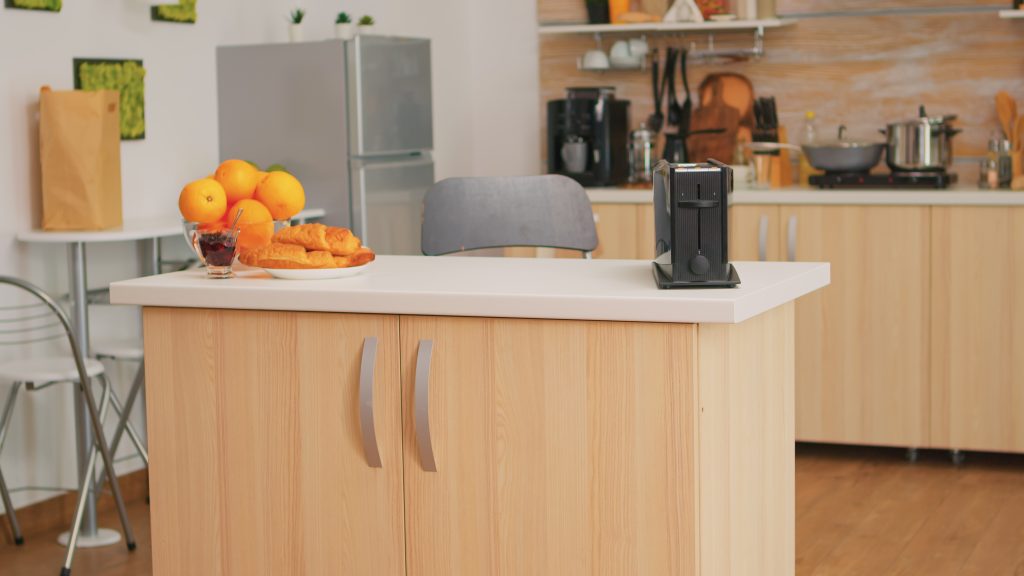
Where should pots and pans be stored?
Pots and pans should be stored close to the range or cooktop because that is where they are used most often. Deep drawers are usually the easiest storage choice because cookware can be lifted from above instead of pulled from the back of a lower shelf.
A lower cabinet with one fixed shelf can hold cookware, but it often becomes messy fast. Pans get stacked too high. Lids disappear. Heavy pots end up in the back. Deep drawers solve that by making everything visible when the drawer opens.
| Cookware Item | Best Storage Choice | Why It Works |
|---|---|---|
| Large pots | Deep lower drawer | Easier lifting and access |
| Frying pans | Wide drawer or vertical divider | Prevents messy stacking |
| Lids | Lid organizer or divided drawer | Keeps sizes visible |
| Dutch oven | Heavy-duty drawer | Safer than upper storage |
| Baking pans | Vertical tray divider | Easy to grab quickly |
For daily cooking, cookware should be stored where the body naturally moves. If the pan is three steps away from the stove, the layout is already making cooking harder.
Are deep drawers better than cabinet shelves?
Deep drawers are usually better than cabinet shelves for pots, pans, mixing bowls, food containers, and small appliances. A drawer brings the storage to the user instead of forcing the user to bend and search.
This is one of the most practical upgrades in a kitchen remodel. It does not always look dramatic in photos, but it changes how the kitchen feels every day. Homeowners who cook often usually notice the difference right away.
For discount cabinets in Kettering, OH, deep drawers are often a smarter place to spend the budget than decorative extras. A clean drawer layout can make a smaller kitchen feel more useful without expanding the room.
How should small appliances be stored?
Small appliances should be stored based on weight and frequency of use. Daily appliances need quick access, while occasional appliances can go in deeper pantry cabinets, rollouts, or lower storage.
A heavy mixer should not be stored on a high shelf. An air fryer used three times a week should not be buried behind serving bowls. A toaster used every morning may need a countertop spot, an appliance garage, or a low cabinet close to the breakfast zone.
| Appliance | Best Location | Planning Tip |
|---|---|---|
| Toaster | Appliance garage or counter zone | Keep near bread and plates |
| Blender | Lower cabinet or pullout shelf | Store near prep area |
| Air fryer | Deep drawer or rollout shelf | Allow easy lifting |
| Stand mixer | Heavy-duty lower storage | Avoid upper cabinets |
| Coffee maker | Beverage station | Keep mugs and supplies nearby |
The best appliance storage is realistic. If putting it away takes too much effort, it will stay on the counter.

Is an appliance garage worth it?
An appliance garage is worth it when the homeowner wants to keep small appliances accessible but visually contained. It works best for items used often, not for appliances used once a year.
A good appliance garage can hold a toaster, coffee supplies, blender, or charging station. It keeps the countertop cleaner while still letting the homeowner open one door and use the item quickly. The design should include enough depth, outlet planning, and door clearance.
For discount cabinets in Kettering, OH, an appliance garage can be useful, but only if it fits the routine. If the kitchen is tight, a pullout shelf or deep drawer may be more practical than a large countertop cabinet.
Where should lids, trays, and cutting boards go?
Lids, trays, and cutting boards should be stored vertically whenever possible. Vertical storage makes flat items easier to see, easier to grab, and easier to return.
Stacking baking sheets and cutting boards usually becomes annoying. The item needed is often at the bottom. A vertical divider near the range or prep zone makes cooking faster and keeps cabinets from turning into piles.
Useful vertical storage works well for:
- Baking sheets
- Cutting boards
- Muffin tins
- Cooling racks
- Serving trays
- Pan lids
- Pizza pans
This is a small storage feature, but it solves a very common kitchen problem.
What cabinet storage helps with meal prep?
Meal prep becomes easier when knives, cutting boards, mixing bowls, trash, spices, oils, and small appliances are stored near the main prep surface. Storage should follow the order of cooking.
A prep zone usually needs a clear countertop, a trash pullout nearby, and drawers for the tools used before food reaches the stove. If the prep zone is on an island, the island should not only be seating. It should include storage that supports actual cooking.
| Prep Zone Need | Cabinet Solution | Daily Benefit |
|---|---|---|
| Food scraps | Pullout trash | Less mess on counters |
| Cutting boards | Vertical divider | Quick access |
| Mixing bowls | Deep drawer | Easy prep setup |
| Knives and tools | Divided drawer | Safer organization |
| Small appliances | Pullout shelf | Less lifting |
A kitchen can have many cabinets and still feel frustrating if prep storage is in the wrong place.
What storage should go near the range?
Storage near the range should include cooking utensils, spices, oils, pans, lids, and heat-safe tools. This keeps cooking focused and reduces unnecessary movement.
A narrow pullout can work well for oils and seasonings. A drawer beside the range can hold spatulas, tongs, measuring spoons, and pot holders. A deep drawer below or beside the cooktop can hold pans and lids.
This type of planning is especially important for busy families. When dinner is moving fast, the kitchen should not make the cook search for everything.
Why do plywood and birch matter for storage-heavy cabinets?
Plywood and birch matter because storage-heavy cabinets need strength, stability, and smooth operation. Deep drawers full of cookware create more weight than simple shelves with light dishes.
Plywood cabinet boxes provide strong support for drawers, shelves, and countertop weight. Birch components can create smooth cabinet fronts for painted or stained finishes. Good drawer slides and soft-close hardware also matter because storage features are opened many times a day.
| Cabinet Feature | Why It Matters |
|---|---|
| Plywood boxes | Strong support for heavy storage |
| Birch components | Smooth cabinet fronts and finishes |
| Full-extension slides | Access to the back of drawers |
| Soft-close hinges | Reduces slamming and wear |
| Professional installation | Helps doors and drawers align correctly |
Cincinnati Cabinets looks at cabinet construction early because storage features only help if they continue working smoothly after daily use.
How do countertops affect storage planning?
Countertops affect storage planning because cabinet layout must be finalized before countertop fabrication. Granite, quartz, and marble need accurate measurements, level cabinets, sink cutouts, seam planning, and proper support.
A large island with appliance storage may need a different countertop overhang than a simple prep island. A cabinet with a pullout trash near the sink may affect plumbing and sink-base planning. Backsplashes should also be coordinated with countertop height, outlet placement, and range location.
| Countertop Material | Heat Resistance | Stain Resistance | Maintenance |
|---|---|---|---|
| Granite | High | Good when sealed | Moderate |
| Quartz | Moderate | Very good | Low |
| Marble | Good but sensitive | Moderate | Higher |
| Quartzite | High | Good when sealed | Moderate |
Cabinet storage, countertop fabrication, and backsplash planning should not be treated as separate decisions. They all shape how the kitchen works.
How much does storage-focused cabinetry cost?
Basic cabinetry can start around $300 per linear foot, but the final cost depends on layout, materials, finish, cabinet height, drawer count, pullouts, hardware, installation, countertop coordination, and backsplash work. Storage-focused designs often cost more because drawers and pullouts require stronger hardware and more detailed planning.
| Project Item | Typical Starting Range | What Affects Cost |
|---|---|---|
| Basic cabinetry | From about $300 per linear foot | Standard layout and simple shelves |
| Upgraded cabinetry | $450–$750+ per linear foot | Plywood, birch, better hardware |
| Storage-focused cabinetry | $700–$1,200+ per linear foot | Drawers, pullouts, pantry systems |
| Cabinet installation | $2,000–$6,000+ | Removal, leveling, trim, kitchen size |
| Countertop fabrication/install | $45–$100+ per sq. ft. | Granite, quartz, marble, sink cutouts |
Cincinnati Cabinets reviews these details before the project moves forward. For discount cabinets in Kettering, OH, a useful estimate should explain cabinet construction, storage features, installation, countertop fabrication, and backsplash coordination.
How long does a cabinet project take?
A cabinet project usually takes about 3-5 weeks after approval, depending on measurements, material availability, finish selection, delivery, installation, countertop coordination, and backsplash work. More drawers, pullouts, appliance storage, and pantry details can affect the timeline.
Cabinets are usually installed before countertops. After base cabinets are level and secure, granite, quartz, or marble can be templated, fabricated, and installed. Backsplash work usually happens after the countertop is in place.
At Cincinnati Cabinets, we plan the order carefully because storage features must work with appliances, plumbing, sink placement, countertop overhangs, and daily cooking zones. For discount cabinets in Kettering, OH, the schedule should include design approval, cabinet installation, countertop fabrication, backsplash planning, and final adjustments.
What mistakes make pot and appliance storage harder to use?
The biggest mistake is storing heavy items too high or too far from where they are used. A stand mixer above shoulder height is not practical. A pan cabinet across the kitchen from the stove slows cooking down.
Another mistake is choosing shelves when drawers would work better. Shelves are fine for some items, but cookware, containers, and small appliances usually need pullout access. A kitchen should not require digging every time someone wants to cook.
Before choosing storage features, review:
- Which pots and pans are used most often
- Which appliances stay on the counter now
- Where food prep happens
- Where the trash should be
- Where the range and sink are located
- Which items are too heavy for upper cabinets
- Which cabinet shelves are currently hard to reach
- Which items need vertical storage
Good storage starts with honest habits, not a catalog picture.

FAQ: Cabinet storage for pots, pans, and small appliances
What is the best cabinet storage for pots and pans?
Deep drawers near the range are usually best because they make cookware easy to see, lift, and put away.
Should small appliances go in upper cabinets?
Light appliances can go in upper cabinets, but heavy appliances should be stored in lower cabinets, drawers, or pullouts.
Is an appliance garage useful?
Yes, if the appliance is used often and the garage has enough depth, outlet planning, and door clearance.
Are pullout shelves worth it?
Pullout shelves are worth it for small appliances, pantry items, and lower cabinets that are hard to reach.
What materials are best for storage-heavy cabinets?
Plywood cabinet boxes and birch components are practical because they support drawers, pullouts, hardware, and daily use.
How much does cabinetry start at?
Basic cabinetry can start around $300 per linear foot. Final pricing depends on layout, materials, finish, hardware, storage features, and installation.
How long does a cabinet project take?
Many cabinet projects take about 3-5 weeks after approval, depending on materials, delivery, installation, countertop fabrication, and backsplash work.
Where can homeowners near Kettering, OH get help planning better kitchen storage?
Cincinnati Cabinets is located near Cincinnati, OH and serves nearby communities, including Kettering, OH. We help homeowners plan discount cabinets in Kettering, OH, choose plywood and birch cabinet construction, add storage for pots, pans, and appliances, coordinate installation, handle countertop fabrication, and match cabinets with granite, quartz, marble, and backsplashes. Our team can help make the kitchen easier to cook in without wasting cabinet space.