

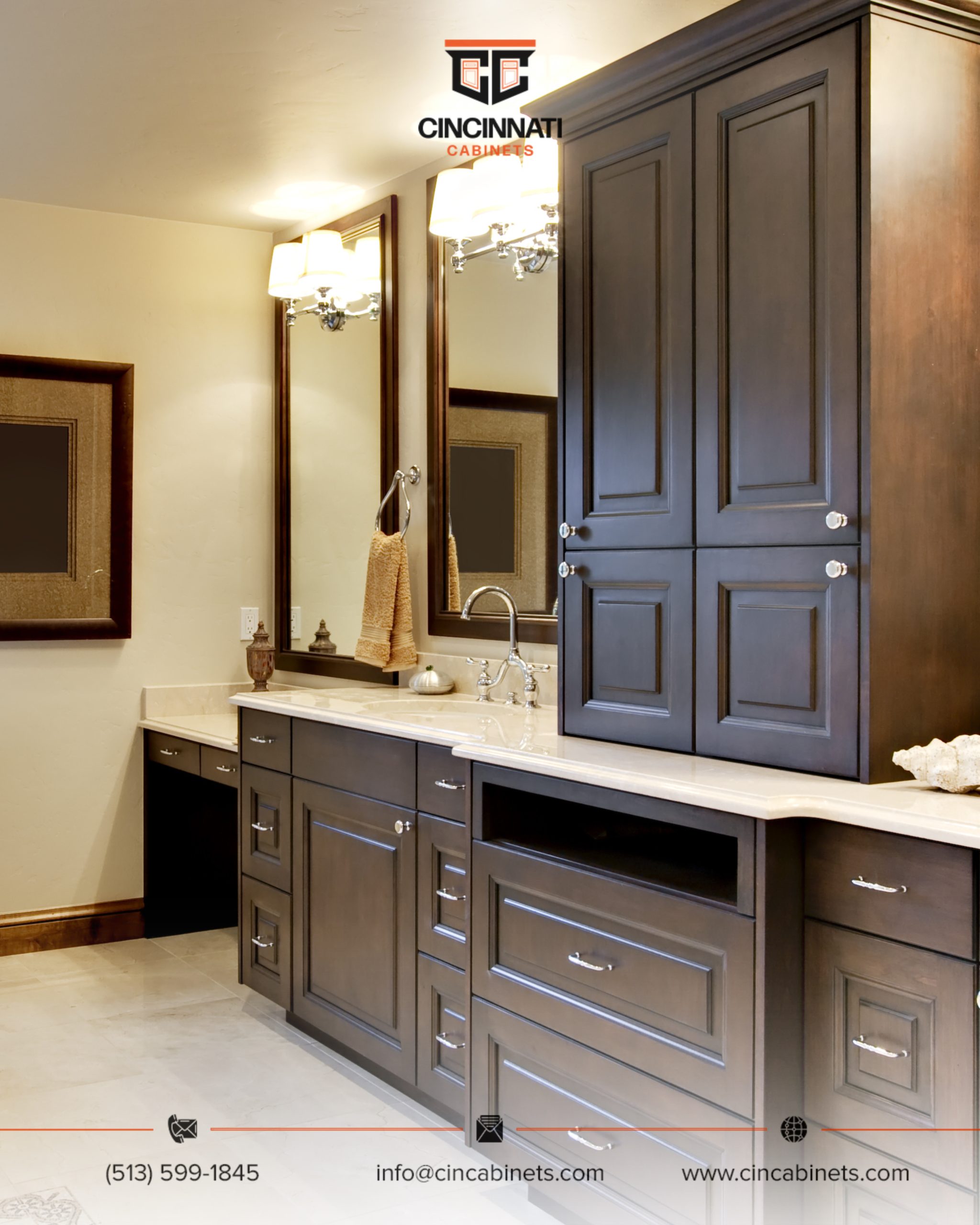
Choose cabinets for a bathroom, laundry room, or closet by starting with the way the space is used every day. Bathrooms need moisture-resistant storage, laundry rooms need strong utility storage, and closets need organized access for clothing, shoes, linens, and seasonal items.
At Cincinnati Cabinets, we do not treat these rooms like smaller versions of a kitchen. Each space has different problems: humidity in bathrooms, heavy products in laundry rooms, and clutter control in closets. For homeowners planning bathroom cabinet doors in Kettering, OH, the best cabinet choice should match the room’s moisture level, storage needs, door clearance, countertop plans, and cleaning routine.
What is the biggest difference between bathroom, laundry room, and closet cabinets?
The biggest difference is what the cabinets need to handle. Bathroom cabinets deal with water and daily grooming. Laundry room cabinets deal with cleaning supplies, detergent, baskets, and sometimes utility sinks. Closet cabinets deal with organization and visibility.
A cabinet that works well in a closet may not be practical beside a bathroom sink. A laundry cabinet may need stronger shelves and easier-clean finishes than a decorative linen cabinet. The room should decide the cabinet design.
| Room | Main Cabinet Need | Common Mistake |
|---|---|---|
| Bathroom | Moisture-resistant vanity storage | Choosing style before sink layout |
| Laundry room | Utility storage and strong shelves | Not planning space for baskets |
| Closet | Organized access and visibility | Too many fixed shelves |
| Linen area | Towels and household items | Shelves too deep |
| Mudroom | Daily grab-and-go storage | No closed storage for clutter |
A good cabinet plan makes the room easier to use, not just prettier.
What cabinets work best in a bathroom?
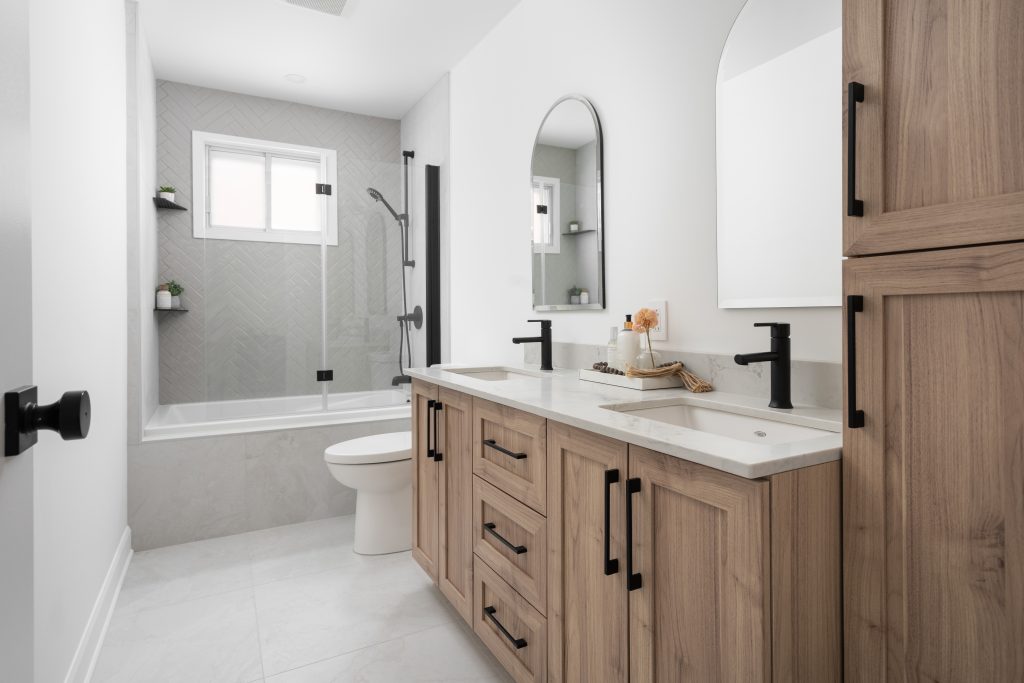
Bathroom cabinets work best when they are moisture-conscious, easy to clean, and planned around the sink, plumbing, and countertop. The vanity should give storage without blocking movement in a tight room.
Drawers are useful for skincare, grooming tools, makeup, toothbrushes, and hair products. Cabinet doors are still important under the sink because plumbing needs access. A mix of drawers and doors is usually better than one large open cabinet.
For bathroom cabinet doors in Kettering, OH, simple Shaker, slim Shaker, and flat panel styles are practical because they are easier to wipe. Heavy raised-panel doors can collect dust and product residue in smaller bathrooms.
What cabinets work best in a laundry room?
Laundry room cabinets work best when they are strong, simple, and placed where supplies are actually used. Upper cabinets can hold detergent, stain removers, dryer sheets, towels, and cleaning products, while lower cabinets can support folding areas or utility sinks.
Laundry rooms often need more function than decoration. If the washer and dryer are side by side, a counter above them can create a folding surface. If there is a sink, the cabinet below should allow plumbing access and protect stored items from moisture.
| Laundry Need | Best Cabinet Feature | Why It Helps |
|---|---|---|
| Detergent storage | Upper cabinets | Keeps products off the counter |
| Folding space | Countertop over base cabinets | Adds usable work area |
| Cleaning supplies | Tall cabinet or pullout | Keeps products contained |
| Hampers | Open lower section or pullout | Easier sorting |
| Utility sink | Sink base cabinet | Allows plumbing access |
A laundry room should reduce piles, not create another place where clutter collects.
What cabinets work best in a closet?
Closet cabinets work best when they make items visible, reachable, and easy to put away. Closets usually need a mix of hanging sections, drawers, shelves, shoe storage, and closed cabinets.
The biggest closet mistake is using only deep shelves. Deep shelves hide clothes in the back and make stacks fall over. Drawers, adjustable shelves, and divided sections usually work better.
Closet cabinets do not always need stone countertops, but some dressing areas, linen stations, or built-in closet islands can use quartz, granite, or marble surfaces. A small countertop area can help with folding, packing, or organizing accessories.
Why do plywood and birch matter in these rooms?
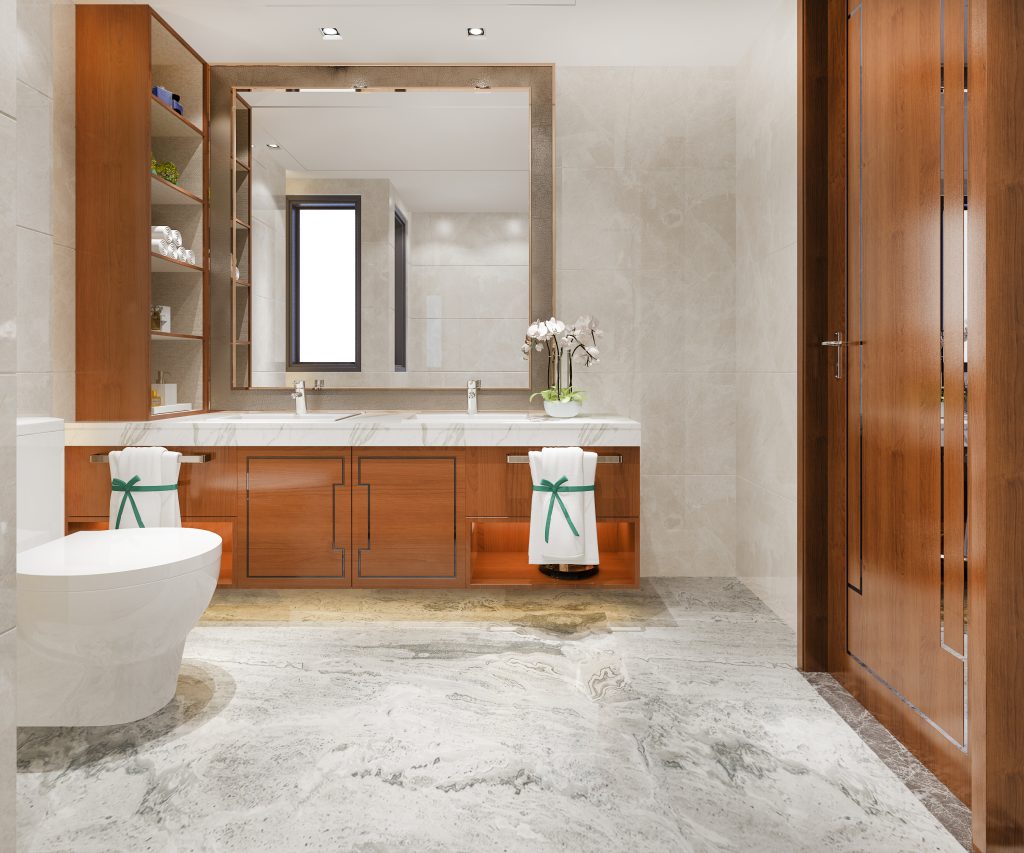
Plywood and birch matter because bathrooms, laundry rooms, and closets are high-use spaces even when they are not the largest rooms in the home. Strong cabinet boxes and smooth fronts help the cabinets stay aligned and easier to clean.
Plywood cabinet boxes provide stable support for shelves, drawers, doors, and countertop materials. Birch components can create smooth cabinet doors and drawer fronts for painted or stained finishes. This is especially helpful in bathrooms and laundry rooms where cabinets are touched with wet hands or exposed to steam and cleaning products.
Cincinnati Cabinets recommends looking at cabinet construction before choosing decorative details. A cabinet in a busy room should be built to handle daily use, not just look good on installation day.
Which cabinet door style is easiest to maintain?
Flat panel, slim Shaker, and simple Shaker cabinet doors are usually easiest to maintain. They have fewer grooves and less trim where dust, lint, toothpaste, detergent residue, or fingerprints can collect.
Bathroom and laundry cabinets should be easy to wipe. Closet cabinets can be more decorative, but simple doors still age well. A satin or low-sheen finish is often more practical than high gloss because it hides streaks and fingerprints better.
| Door Style | Cleaning Ease | Best Room |
|---|---|---|
| Flat panel | Very easy | Laundry rooms, modern closets |
| Slim Shaker | Easy | Bathrooms, closets, laundry rooms |
| Simple Shaker | Moderate | Classic bathrooms and storage areas |
| Raised panel | More detailed | Larger traditional spaces |
| Glass doors | Moderate | Accent linen or display areas |
For bathroom cabinet doors in Kettering, OH, easy cleaning matters because the room is used daily and usually has less ventilation than the kitchen.
What countertop materials work best in bathrooms and laundry rooms?
Quartz is often the easiest countertop material for bathrooms and laundry rooms because it resists stains well and does not need sealing. Granite is durable and works well when sealed as needed. Marble looks beautiful but needs more careful use.
Bathroom counters deal with toothpaste, soap, makeup, skincare, hair tools, water, and cleaners. Laundry counters deal with detergent, bleach alternatives, stain removers, damp clothes, and folding. The surface should match that use.
| Countertop Material | Heat Resistance | Stain Resistance | Maintenance Level |
|---|---|---|---|
| Granite | High | Good when sealed | Moderate |
| Quartz | Moderate | Very good | Low |
| Marble | Good but sensitive | Moderate | Higher |
| Quartzite | High | Good when sealed | Moderate |
Backsplashes are also useful in bathrooms and laundry rooms because they protect the wall behind sinks and counters from water, soap, and cleaning residue.
How should storage be planned in each room?
Storage should be planned by item size, frequency of use, and reach. Daily items should be easy to access, while bulk or seasonal items can go higher or farther away.
A bathroom vanity should hold personal products and towels without crowding plumbing. A laundry room should hold cleaning products safely and keep folding areas clear. A closet should make clothing and accessories visible enough to use.
Useful storage planning includes:
- Drawers for small daily bathroom items
- Cabinet doors for plumbing access
- Tall cabinets for laundry supplies
- Adjustable shelves for towels and linens
- Pullouts for cleaning products
- Dividers for closet accessories
- Open shelves only where items stay neat
Good storage should make cleanup easier after the room is used.
How much do bathroom, laundry, and closet cabinets cost?
Basic cabinetry can start around $300 per linear foot, but the final cost depends on room size, cabinet material, door style, finish, drawers, shelves, hardware, installation, countertop coordination, and backsplash work. Smaller rooms are not always cheaper if the storage is detailed or the space is tight.
| Project Item | Typical Starting Range | What Affects Cost |
|---|---|---|
| Basic cabinetry | From about $300 per linear foot | Standard layout and simple doors |
| Upgraded cabinetry | $450–$750+ per linear foot | Plywood, birch, stronger hardware |
| Storage-focused cabinetry | $700–$1,200+ per linear foot | Drawers, pullouts, closet systems |
| Cabinet installation | $1,500–$5,000+ | Removal, leveling, trim, room size |
| Countertop fabrication/install | $45–$100+ per sq. ft. | Granite, quartz, marble, sink cutouts |
Cincinnati Cabinets reviews these details before a project begins. For bathroom cabinet doors in Kettering, OH, a useful estimate should explain cabinet construction, door style, installation, countertop fabrication, sink cutouts, and backsplash coordination.
How long does this type of cabinet project take?
Most cabinet projects take about 3-5 weeks after approval, depending on measurements, material availability, finish selection, delivery, installation, countertop coordination, and backsplash work. Bathrooms, laundry rooms, and closets may also need extra planning for plumbing, electrical outlets, appliances, or tight wall dimensions.
Cabinets are usually installed before countertops. Once base cabinets are level and secure, granite, quartz, or marble can be templated, fabricated, and installed. Backsplash work usually happens after the countertop is in place.
At Cincinnati Cabinets, we plan this order carefully because small rooms leave less room for mistakes. For bathroom cabinet doors in Kettering, OH, the schedule should include design approval, cabinet installation, countertop fabrication, backsplash planning, plumbing coordination, and final adjustments.
What mistakes should homeowners avoid?
The biggest mistake is choosing the same cabinet layout for every room. A bathroom, laundry room, and closet should not be planned with the same storage logic.
Another mistake is ignoring door swings and drawer clearance. A drawer that hits a toilet, washer, door frame, or closet wall will become annoying quickly. Plumbing, appliances, hampers, mirrors, and light switches should all be reviewed before ordering.
Before choosing cabinets, check:
- Room measurements
- Main daily items stored there
- Moisture exposure
- Plumbing location
- Door and drawer clearance
- Countertop material
- Backsplash needs
- Shelf depth
- Hardware durability
- Cleaning habits
Small rooms work better when every cabinet has a clear job.
FAQ: Cabinets for bathrooms, laundry rooms, and closets
What cabinets are best for bathrooms?
Bathroom cabinets should be moisture-conscious, easy to clean, and planned around sink plumbing, drawers, doors, countertops, and backsplashes.
What cabinet style is easiest to clean?
Flat panel, slim Shaker, and simple Shaker doors are usually easiest because they have fewer grooves and trim details.
What cabinets work best in a laundry room?
Laundry rooms work best with upper storage, strong shelves, base cabinets, sink cabinets, and folding surfaces.
What materials are best for these cabinets?
Plywood cabinet boxes and birch components are practical because they support strength, smooth finishes, and daily use.
What countertop is best for bathroom or laundry cabinets?
Quartz is usually easiest to maintain, granite is durable when sealed, and marble is beautiful but needs more care.
How much does cabinetry start at?
Basic cabinetry can start around $300 per linear foot. Final pricing depends on layout, materials, finish, storage features, installation, and countertop work.
How long does cabinet installation take?
Many cabinet projects take about 3-5 weeks after approval, depending on materials, delivery, installation, countertop fabrication, and backsplash work.
Where can homeowners near Kettering, OH get help choosing cabinets for smaller rooms?
Cincinnati Cabinets is located near Cincinnati, OH and serves nearby communities, including Kettering, OH. We help homeowners plan bathroom cabinet doors in Kettering, OH, choose plywood and birch cabinet construction, coordinate installation, handle countertop fabrication, and match cabinets with granite, quartz, marble, and backsplashes. Our team can help make bathrooms, laundry rooms, and closets more organized, practical, and easier to use every day.