

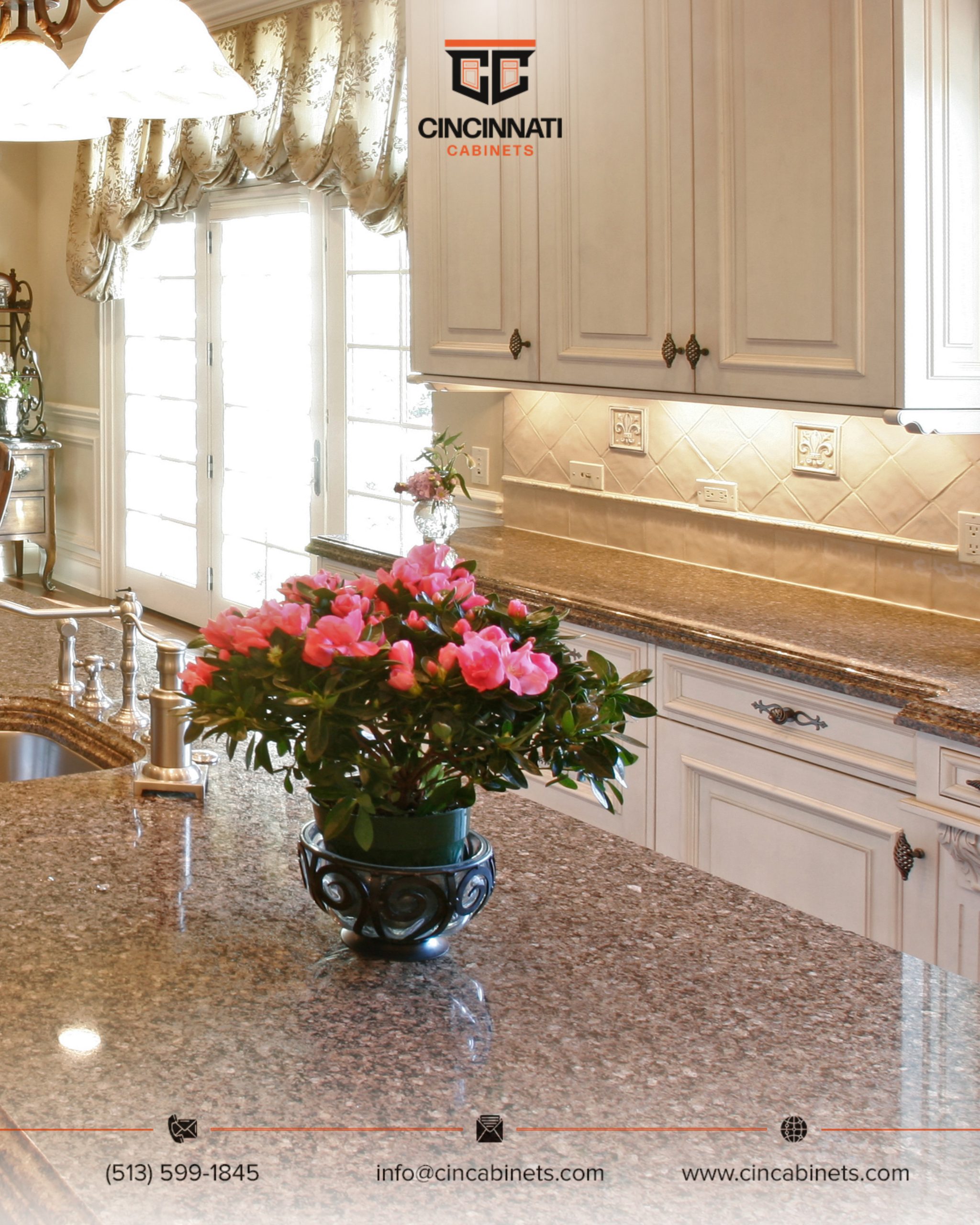
Choose cabinet colors with warm undertones, soft contrast, and materials that balance the room’s lighting. Warm white, cream, greige, taupe, natural wood, mushroom gray, and soft beige usually feel more comfortable than icy white, blue-gray, or flat charcoal.
At Cincinnati Cabinets, we often see homeowners worry that a kitchen will look too dark, then accidentally choose colors that feel too cold. Bright is not the same as warm. For homeowners planning custom cabinetry in Springfield, OH, the best cabinet color should make the room feel lighter without making it feel sterile.

What cabinet colors feel warm but still look clean?
Warm white, cream, greige, taupe, light wood, and muted beige usually feel warm while still looking clean. These colors brighten the room without the sharpness of pure white or cool gray.
A warm white cabinet can look fresh with quartz or light granite. Greige can soften a kitchen that has stainless steel appliances or gray flooring. Natural wood adds warmth quickly because the grain brings movement and texture.
| Cabinet Color | Warmth Level | Best Pairing |
|---|---|---|
| Warm white | High | Quartz, marble-look tops, brass or nickel |
| Cream | High | Beige tile, wood floors, warm granite |
| Greige | Medium to high | White quartz, taupe backsplash |
| Taupe | Medium to high | Light stone, black or bronze hardware |
| Light wood | High | Quartz, granite, simple backsplash |
| Cool gray | Low | Needs warm counters and lighting |
A kitchen does not need to be dark to feel warm. It needs the right undertone.
Why do some white cabinets feel too cold?
White cabinets feel too cold when the shade has a blue or gray undertone and the rest of the kitchen does not balance it. Cool white can look clean in a showroom but harsh at home.
Lighting makes this more noticeable. North-facing light, bright LEDs, gray flooring, stainless steel appliances, and a cool marble-look countertop can all make white cabinets feel colder. A softer white usually works better in everyday kitchens.
For custom cabinetry in Springfield, OH, we recommend looking at white cabinet samples beside the actual countertop, backsplash, flooring, and wall color. A white that looks perfect by itself may change quickly when placed next to other materials.
Are gray cabinets always cold?
Gray cabinets are not always cold, but the undertone decides everything. Blue-gray and steel-gray can feel cool, while greige, mushroom gray, taupe-gray, and warm charcoal can feel softer.
Gray became popular because it feels neutral, but not every gray works in every home. A cool gray kitchen with gray floors and a white backsplash can feel flat. A warmer gray with wood accents, cream tile, or light quartz can feel calm and balanced.
| Gray Type | How It Feels | Better Pairing |
|---|---|---|
| Blue-gray | Cool | Warm wood, cream backsplash |
| Steel gray | Cool and modern | Warm lighting, soft white counters |
| Greige | Warm neutral | Quartz, granite, brushed hardware |
| Mushroom gray | Soft and warm | Natural wood, beige tile |
| Charcoal | Dramatic | Light counters and warm accents |
Gray is safest when it has warmth built into it.
Do wood cabinets make a kitchen feel warmer?
Wood cabinets are one of the easiest ways to make a kitchen feel warmer. Natural grain adds softness that painted cabinets cannot fully create.
Light oak, white oak, walnut, and muted brown finishes can make a kitchen feel more lived-in without looking outdated. The key is avoiding orange-heavy stains, glossy finishes, or wood tones that fight the floor. Wood should feel natural, not heavy.
Wood cabinets also pair well with white quartz, soft granite, marble-look surfaces, and simple backsplashes. They are especially helpful when the kitchen has a lot of metal, tile, or cool light.

How do countertops affect cabinet warmth?
Countertops affect cabinet warmth because they sit directly against the cabinet color and cover a large visual area. Granite, quartz, marble, and quartzite can all make cabinets feel warmer or colder depending on tone and pattern.
Quartz is useful when homeowners want a controlled color palette. Granite can add natural warmth through speckles, minerals, and movement. Marble can feel elegant, but some slabs look cool because of blue-gray veining. Quartzite can add warmth when the slab has cream, beige, taupe, or gold movement.
| Countertop Material | Heat Resistance | Stain Resistance | Warmth Note |
|---|---|---|---|
| Granite | High | Good when sealed | Natural movement can warm the room |
| Quartz | Moderate | Very good | Choose cream, warm white, or greige tones |
| Marble | Good but sensitive | Moderate | Can feel cool with gray veining |
| Quartzite | High | Good when sealed | Warm slabs can soften white cabinets |
For custom cabinetry in Springfield, OH, cabinet color should be selected with the countertop sample in the same lighting. The two surfaces need to agree.
What backsplash keeps cabinet colors from feeling cold?
A warm, simple backsplash can keep cabinet colors from feeling cold. Cream tile, warm white tile, beige tile, handmade-look tile, soft taupe, or a low-contrast stone backsplash can all help.
The backsplash sits between cabinets and countertops, so it can either connect the palette or make the contrast feel awkward. A cold white backsplash between warm cabinets and warm stone can look disconnected. A soft neutral backsplash usually feels smoother.
Backsplashes also protect the wall behind the sink, range, and prep areas. The best choice should look warm and still be easy to clean.
What hardware makes cabinets feel warmer?
Champagne bronze, brushed brass, aged brass, oil-rubbed bronze, and warm nickel can make cabinets feel warmer. Hardware is a small detail, but it changes how the cabinet color reads.
Black hardware can look sharp, but too much black can make a light kitchen feel high-contrast instead of warm. Chrome can look clean, but it may feel cool beside white or gray cabinets. Brushed nickel is a practical middle ground when brass feels too bold.
Hardware should also match the faucet, lighting, and appliance finish. It does not have to match perfectly, but it should feel intentional.
Why do plywood and birch matter for cabinet color?
Plywood and birch matter because a warm cabinet color only looks good when the cabinet construction is clean, stable, and well-finished. Uneven doors, shifting drawer fronts, and poor finish quality are easier to notice in lighter cabinet colors.
Plywood cabinet boxes provide strong support for storage, countertops, and daily use. Birch components can create smooth cabinet doors and drawer fronts for painted or stained finishes. This matters for warm whites, greige, taupe, and wood finishes because the surface needs to look even.
Cincinnati Cabinets looks at construction before final color because cabinet warmth is not only about paint. It is also about clean lines, stable boxes, good hardware, and professional installation.
How much do warmer cabinet colors cost?
Basic cabinetry can start around $300 per linear foot, but the final price depends on layout, cabinet material, door style, finish, hardware, storage features, installation, countertop coordination, and backsplash work. Warm cabinet colors do not automatically cost more, but specialty finishes, stained wood, custom colors, and detailed storage can change the total.
| Project Item | Typical Starting Range | What Affects Cost |
|---|---|---|
| Basic cabinetry | From about $300 per linear foot | Standard layout and simple doors |
| Upgraded cabinetry | $450–$750+ per linear foot | Plywood, birch, stronger hardware |
| Storage-focused cabinetry | $700–$1,200+ per linear foot | Drawers, pullouts, pantry systems |
| Cabinet installation | $2,000–$6,000+ | Removal, leveling, trim, kitchen size |
| Countertop fabrication/install | $45–$100+ per sq. ft. | Granite, quartz, marble, sink cutouts |
Cincinnati Cabinets reviews these details before a project begins. For custom cabinetry in Springfield, OH, a useful estimate should explain cabinet construction, color choice, finish, installation, countertop fabrication, and backsplash coordination.
How long does a cabinet project take?
A cabinet project usually takes about 3-5 weeks after approval, depending on measurements, material availability, finish selection, delivery, installation, countertop coordination, and backsplash work. Custom colors, stained wood finishes, specialty doors, or storage-heavy layouts can affect timing.
Cabinets are usually installed before countertops. After base cabinets are level and secure, granite, quartz, or marble can be templated, fabricated, and installed. Backsplash work usually happens after the countertop is in place.
At Cincinnati Cabinets, we plan this order carefully because warm color choices depend on the full room. For custom cabinetry in Springfield, OH, the schedule should include design approval, cabinet installation, countertop fabrication, backsplash planning, and final adjustments.
What mistakes make cabinet colors feel cold?
The biggest mistake is choosing colors separately. A cabinet sample, countertop sample, backsplash tile, floor sample, and wall paint can each look nice alone and still feel wrong together.
Another mistake is choosing only gray and white surfaces. A kitchen with cool white cabinets, gray quartz, gray floors, chrome hardware, and bright LED lighting can feel cold even if every material is expensive. Warmth usually comes from undertone, texture, wood, lighting, or softer contrast.
Before choosing cabinet colors, review:
- Natural light direction
- Cabinet undertone
- Countertop color
- Backsplash sample
- Flooring tone
- Wall paint
- Hardware finish
- Lighting temperature
- Wood accents
- Cleaning habits
A warmer kitchen is built through layers, not one color decision.

FAQ: Choosing cabinet colors that do not feel cold
What cabinet color feels warm but still modern?
Greige, warm white, taupe, light wood, and mushroom gray usually feel warm while still looking current.
Are white cabinets too cold?
They can be if the white has a blue or gray undertone. Warm white or soft white is usually easier to live with.
Are gray cabinets outdated?
No, but cool gray can feel flat. Warm gray, greige, and mushroom tones usually feel more current.
What countertop warms up white cabinets?
Warm quartz, light granite, cream quartzite, and marble-look surfaces with beige or taupe movement can soften white cabinets.
What backsplash makes a kitchen feel warmer?
Cream, warm white, beige, handmade-look tile, and low-contrast stone backsplashes can make the kitchen feel warmer.
What materials are best for cabinet construction?
Plywood cabinet boxes and birch components are practical because they support strength, smooth finishes, and daily use.
How much does cabinetry start at?
Basic cabinetry can start around $300 per linear foot. Final pricing depends on layout, materials, finish, hardware, storage features, installation, and countertop work.
How long does cabinet installation take?
Many cabinet projects take about 3-5 weeks after approval, depending on materials, delivery, installation, countertop fabrication, and backsplash work.
Where can homeowners near Springfield, OH get help choosing warmer cabinet colors?
Cincinnati Cabinets is located near Cincinnati, OH and serves nearby communities, including Springfield, OH. We help homeowners plan custom cabinetry in Springfield, OH, choose plywood and birch cabinet construction, compare warm whites, greige, wood tones, and soft neutrals, coordinate installation, handle countertop fabrication, and match cabinets with granite, quartz, marble, and backsplashes. Our team can help create a kitchen that feels bright, warm, and comfortable instead of cold.